Adapted from previously published coverage.
Welcome back to Off the Record. I'm writing this newsletter on my way to Madrid
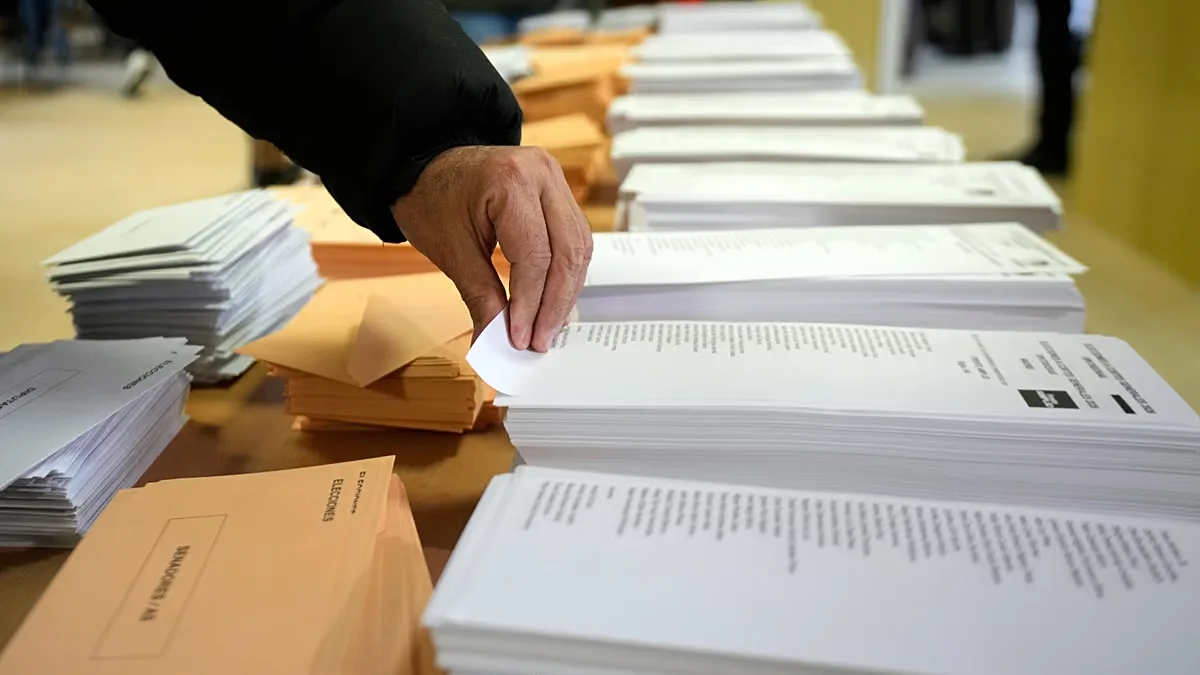
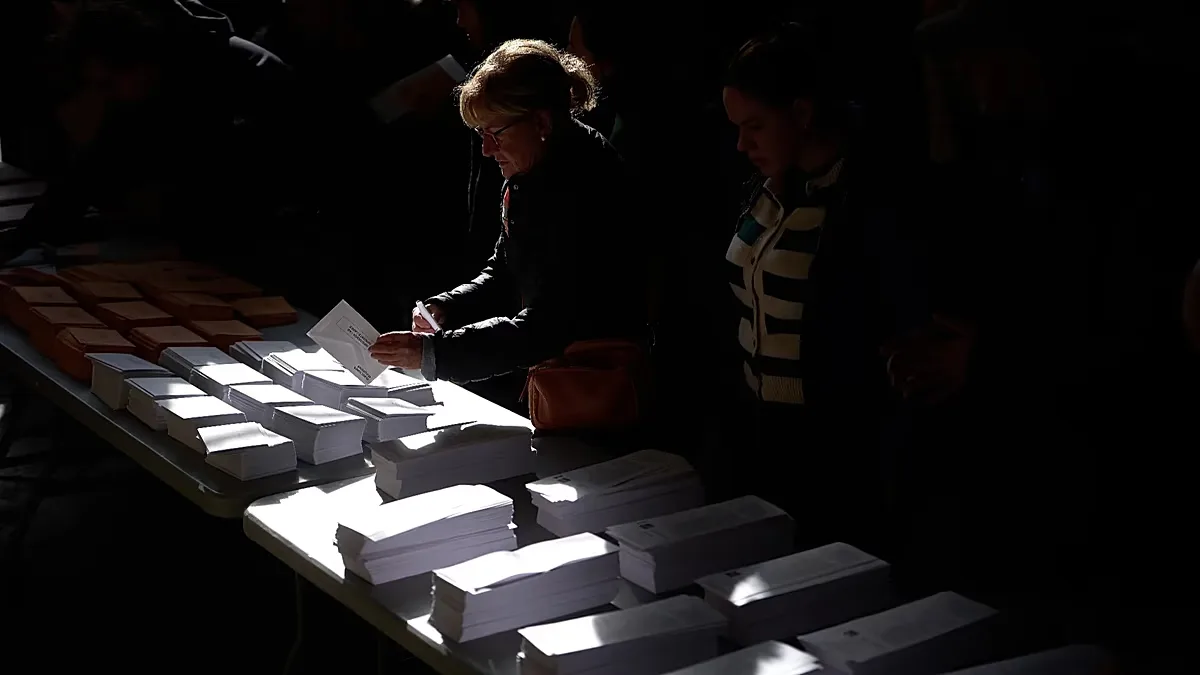
We'll be covering Sunday's Spanish elections and the final hours of campaigning ahead of one of the most fascinating votes of the year. In between, I'm hoping to squeeze in a visit to the Museo Thyssen and finally catch La Bola Negra at the cinema (I feel very much out of the zeitgeist).
If the polls are correct – and that's never a given – Pedro Sánchez, the acrobat, the eternal survivor, will lose his governing majority, putting an end to eight rollercoaster years in office.
As with most things involving Sánchez, his political trajectory is unconventional.
He was elected party leader in 2014, then kicked out in 2016 after a string of poor results, only to return a year later with the support of rank-and-file members.
In those turbulent years, Sánchez figured out he is at his best when he doesn't play by the book. He is the only Spanish politician to have become prime minister by successfully unseating an incumbent in a vote of no confidence.
He has played politics with a capital P, so ferociously, so furiously, that he has changed the nature of Spanish politics. But Sánchez is also a leader who will promise A and deliver B, with little explanation beyond his own political survival.
He has, at times, pushed the boundaries of political morality, and in recent years his administration has become embroiled in multiple corruption cases involving his top lieutenants, some of whom have ended up in jail.
With his suave looks, quiet voice and eye contact – as if he is really listening and genuinely affected – he claims he didn't know and is himself hurt by the betrayal of trust. But if he didn't know, then his judgement is, at best, shaky.
So, what happens next?
On paper, Spain looks set to shift to the right, joining a string of European countries switching sides, with voters looking, for the most part, for a harder line on migration, identity politics and crime – three issues that have become increasingly entangled.
How far to the right? It depends on the balance of power between the Partido Popular (PP), the mainstream, vanilla conservatives who have alternated in power with the Socialists, and Vox, the far-right party campaigning on remigration and the so-called national priority.
Sounds familiar? Yes, Germany's AfD promises to send migrants back (including second generation), and France's Marine Le Pen also promises to put the French first with la priorité nationale.
But would a PP-Vox government be anything like an AfD government alongside the CDU in Germany, or a Le Pen presidency in Paris? Would it have the same implications for Europe, and would it be equally seismic for the EU?
Not necessarily.
A PP-Vox government would certainly put an end to the Spanish exception. It would knock out one of the last progressive bastions in Europe. It would also have a destabilising impact on the European balance of power.
Sánchez, a Socialist, has played an outsized role over the past four years because, as left-leaning governments across the EU were booted out, he stayed put.
The Spanish PM wields considerable influence over the progressive group in the European Parliament, which is largely controlled by the Spanish delegation, and deals directly with the Commission as the leading voice of the European left.
With Sánchez gone, much of that influence goes too. His championing of green energy, trade dialogue with China (a mistake, in my view) and anti-Trump rhetoric would also give way to a very different approach under a PP-Vox coalition.
But would this represent a hard-right shift that could ostracise Spain in Brussels? It depends. First, the definition of the hard right has evolved over the years, reflecting the EU's own shift towards tougher positions.
Giorgia Meloni was expected to usher in a neo-fascist government that would leave Rome isolated in Brussels judging by the press coverage of her campaign in 2022.
That didn't happen. In fact, the Italian prime minister is running the show on key files like migration. As with Italy, you'll read and hear countless historical references – in Spain's case, to the Civil War and dictator Francisco Franco – but most of them miss the point in terms of how these parties approach power today.
If the PP wins a comfortable number of seats, with Vox joining the coalition but without wielding disproportionate influence, you can expect a fairly straightforward conservative government – not without internal tensions, but broadly following the line of the European People's Party.
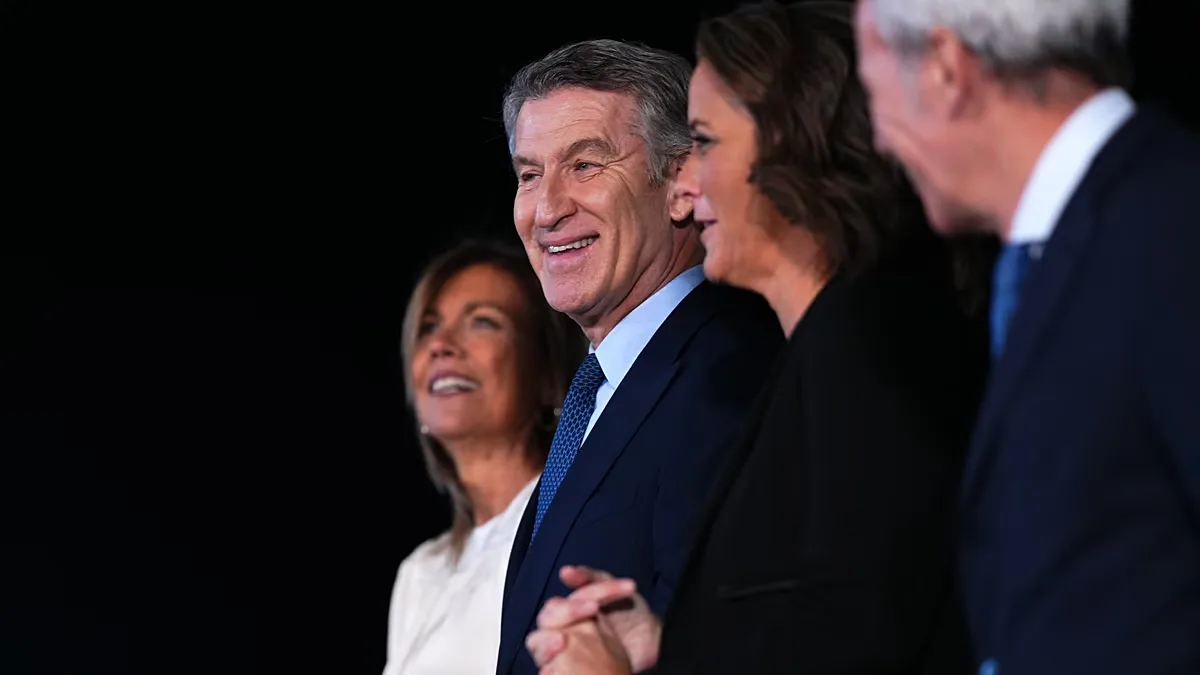
Abroad, such a coalition would be seen as the most right-wing government in Spain's democratic history, yet the conservative candidate, Alberto Núñez Feijóo, is promising a return to the European mainstream at home by ditching Sánchez's foreign policy.
In practice, that means taking a harder line on China, Morocco and left-wing Latin American regimes, while toning down the fireworks directed at Trump. At home, the PP tends to focus on the economy and is generally weak when it comes to cultural firebrand issues - Madrid, the capital, being the exception.
Vox claims to defend a Western, Catholic identity. It has fostered ties with the MAGA world and the Latin American right, and has described Sánchez as a puppet of Morocco responsible for the "invasion" of Ceuta.
It also sits with Patriots for Europe in the European Parliament, a group that the EPP considers outside the European consensus. In other words, it is closer to Le Pen than to Meloni, who has become acceptable to the mainstream right, unlike Marine.
The concern for the PP, which is acutely aware of the optics and wants to be seen as fully anchored in the EU consensus, is a stronger-than-expected performance by Vox.
That would shift the balance of power and put Feijóo, who cannot speak English and has no experience in Brussels or international affairs, in serious difficulty when it comes to communicating to Brussels and financial markets that his government will play by the rules. Some of those complications were already apparent this week, when Vox leader Santiago Abascal said he would ditch the Mercosur trade agreement.
But Vox is also remarkably bad when it comes to exercising power.
In regional governments, where its votes are worth their weight in gold to the PP, it has failed to impose its political agenda. Some of its most palatable figures have left, leaving behind a largely mediocre, little-known cast of politicians.
The first test, assuming the two parties can muster a majority, would be how many cabinet jobs Vox secures and which ministries it gets to control. Its ambitions could extend to the interior and defence portfolios (this would be a terrible idea). In a coalition, the devil is always in the detail.
Feijóo knows he's walking a fine line. This is his very last chance. If he doesn't govern, that's the end of the road for him. He must tread carefully from now on, and keeping Vox in check won't be easy if they pull off a strong result on Sunday.
As for Sánchez, something curious happened during Thursday's final debate. Asked whether he would resign if he loses on Sunday, he fully dodged the question. You'd be a fool to think you've seen the last of him.
Thank you for reading Off the Record. You can email me your comments at maria.tadeo@euronews.com
Comments 0
No comments yet. Start the conversation.
Leave a comment