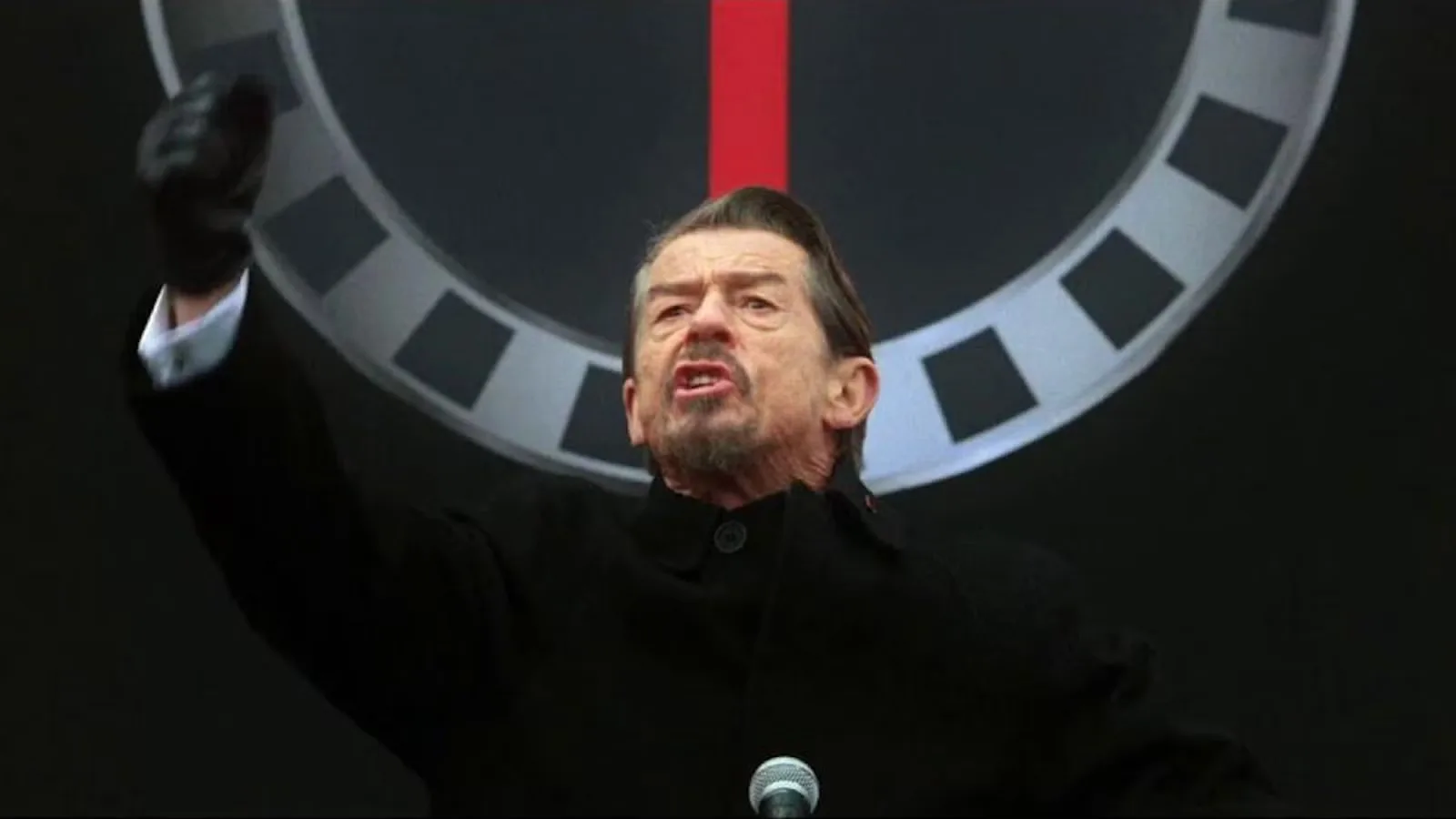
Remember, remember, the fifth of November. Some movies can become less relevant as times change and politics shift, but some remain eerily prescient and, dare we say, timeless. An anonymous Robin Hood, or terrorist, depending on your point of view. Fighting authority and government, battling surveillance, propaganda, fear, and the erosion of individual freedom — these issues haven't exactly vanished, and that explains why one of the 2000s' most distinctive dystopian movies refuses to disappear.
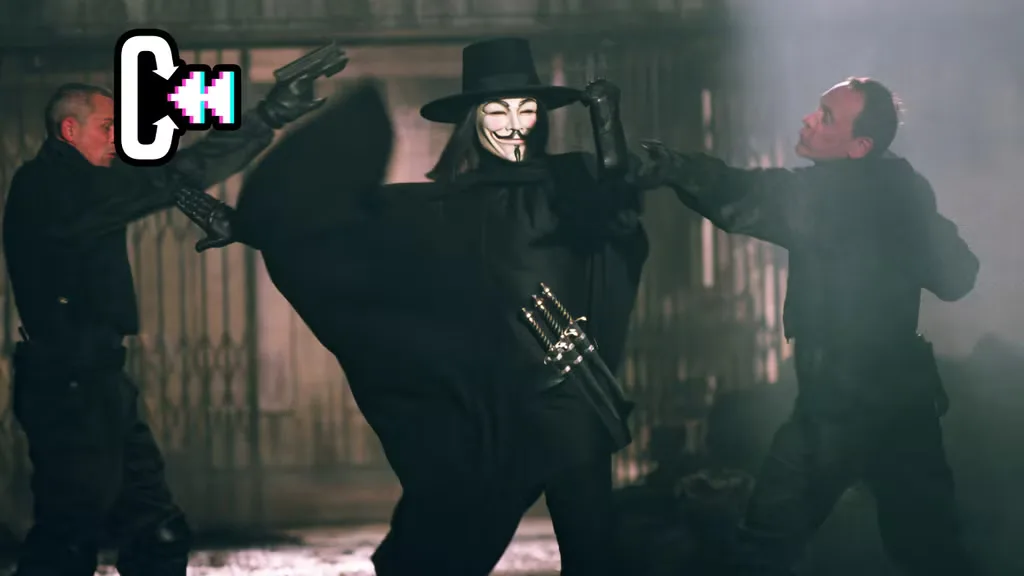
Based on the graphic novel by Alan Moore and David Lloyd, and set against the futuristic landscape of totalitarian Britain, V for Vendetta tells the story of a mild-mannered young woman named Evey who is rescued from a life-and-death situation by a masked man known only as 'V.' Incomparably charismatic and ferociously skilled in the art of combat and deception, V ignites a revolution when he urges his fellow citizens to rise up against tyranny and oppression. As Evey uncovers the truth about V's mysterious background, she also discovers the truth about herself, and emerges as his unlikely ally in the culmination of his plan to bring freedom and justice back to a society fraught with cruelty and corruption.
Twenty years after its original release, V for Vendetta is officially returning to theaters for two nights only on November 1 and November 5, courtesy of Fathom Entertainment, Warner Bros., and DC Vertigo. Tickets are now on sale for the anniversary event, which will present James McTeigue's (Ninja Assassin) dystopian thriller on the big screen alongside an exclusive new featurette featuring the director.
The cast is led by Natalie Portman (Black Swan) as Evey Hammond and Hugo Weaving (The Matrix) as V, alongside Stephen Rea (The Crying Game) as Eric Finch, Stephen Fry (Gosford Park) as Gordon Deitrich, John Hurt (Alien) as Adam Sutler, Rupert Graves (Sherlock) as Dominic Stone, Roger Allam (Endeavour) as Lewis Prothero, and Tim Pigott-Smith (Quantum of Solace) as Peter Creedy.
Why Is 'V for Vendetta' So Timeless?

McTeigue spoke at length with Collider earlier this year about why the movie's politics have continued resonating long after its original release. He feels the issues explored in the movie are "timeless" because they aren't unique to any particular time period, but are issues every generation will deal with.
“I feel like V has become timeless because it didn’t try to lean too much into the politics of the day. It tried to give you this overview of political systems and people that exist in them, and individual freedoms that always exist within those political systems, but wrapped up in an anti-superhero movie. I don’t think I would have changed anything just because the parallels are there, and they’ll be there in 40 years, and they’ll be there in 60 years.”
Perhaps the movie's most extraordinary legacy isn't actually on screen. The stylized Guy Fawkes mask worn by V escaped the confines of the movie and became an internationally recognizable symbol of protest, subsequently appearing during demonstrations around the world. McTeigue told Collider that watching an element created for the movie take on an entirely separate cultural meaning was something he could never have predicted:
“The mask lived on, and people really understood what the mask represented, which was there was more power in a group of people, and the mask let people protest in a way they couldn’t have before. So, I think the film resonated that way. It sort of spread its tentacles out into society, and so now, just about everyone in the world knows what a Guy Fawkes mask is, right? It’s an amazing thing for your film to slip into the culture like that. It’s a one-in-a-million shot sometimes.”
V for Vendetta returns to theaters for its 20th anniversary on November 1 and November 5, 2026.

Comments 0
No comments yet. Start the conversation.
Leave a comment