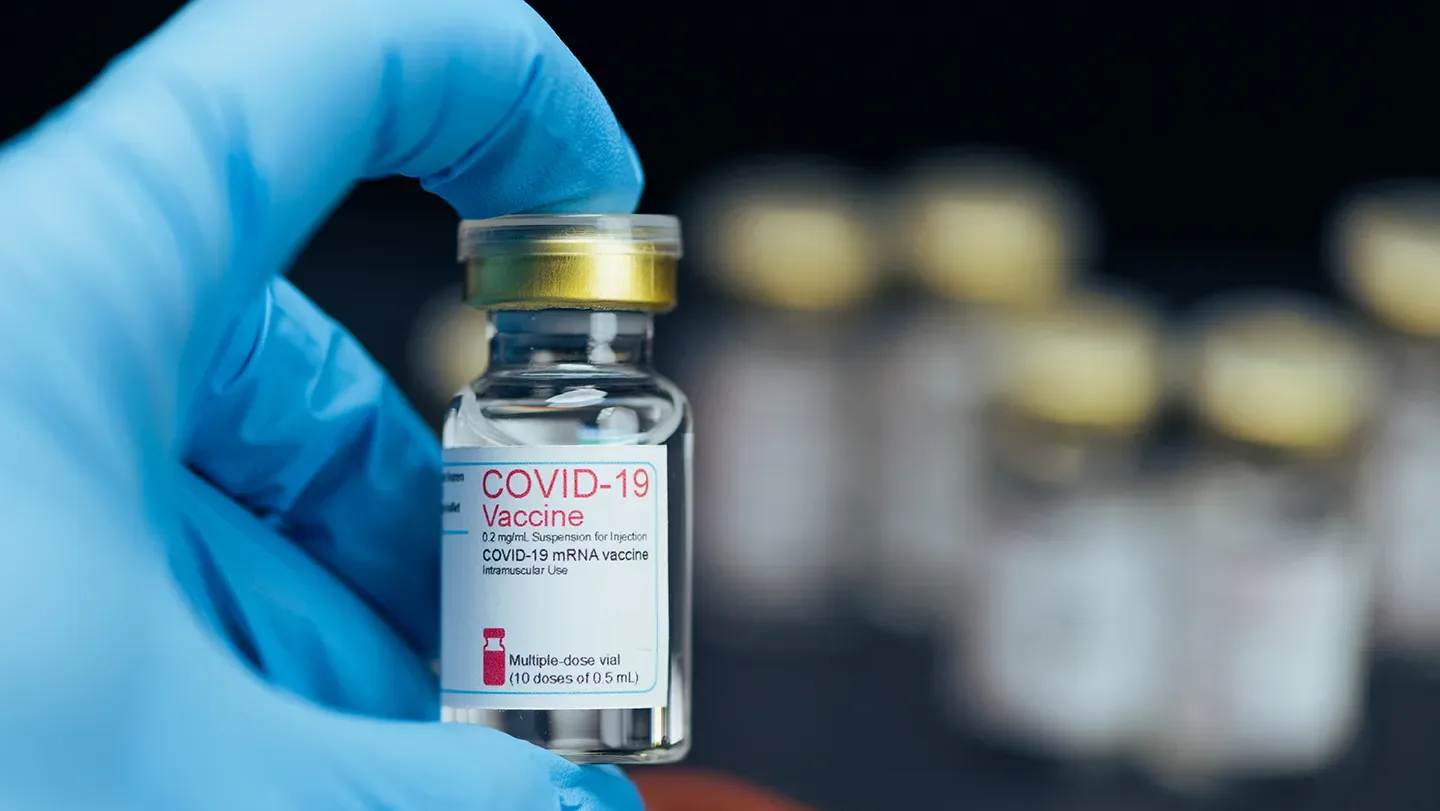
The COVID-19 vaccine may offer brain cancer patients an unexpected chance at longer survival.
Patients who received the vaccine within 100 days before a biopsy or tumor surgery lived twice as long as those who did not get the shot, scientists report July 31 on the preprint server medRxiv. The link appeared only for COVID-19 vaccines, not for other vaccines the team examined.
The finding suggests the COVID-19 vaccine might somehow activate the immune system's cancer-fighting abilities, says James Markert, a neurosurgeon at the University of Alabama at Birmingham. But he emphasizes that his team's paper, a preliminary study that has not been peer-reviewed, found an association between vaccination and survival—it did not demonstrate cause and effect.
Even so, evidence is accumulating that mRNA COVID-19 vaccines may prompt anti-cancer activity, says Elias Sayour, a pediatric oncologist at the University of Florida College of Medicine in Gainesville, who was not involved with the new study.
Last year, Sayour's team linked mRNA COVID-19 vaccination with longer survival in patients with other cancers. People with lung cancer or melanoma who were vaccinated within a few months of immunotherapy lived nearly twice as long as unvaccinated patients. The latest study adds more evidence, Sayour says. 'I think it's very interesting and I think it's very important,' he says.
Markert's team examined data from 187 people with glioblastoma, an aggressive brain cancer with no cure. All had their brain tumors biopsied or surgically removed between 2022 and 2025. Half of those vaccinated before surgery lived 743 days or longer, while median survival for unvaccinated patients was just 349 days. For glioblastoma patients, who have few treatment options, that amounts to an extra year of life.
The researchers tried to control for factors such as the severity of any COVID infections and whether vaccinated people had better health care than their unvaccinated peers. But it is impossible to account for everything, Markert says, leaving it unclear exactly what is happening.
COVID vaccines may be rousing the immune system to attack cancer. Previous studies have hinted that mRNA-based vaccines in particular could be prompting this immune action. In both Markert's and Sayour's studies, non-mRNA vaccines, such as those for flu and pneumonia, did not give cancer patients the same survival boost.
In the glioblastoma study, surgery itself may be helping spark an immune effect, the researchers say. Before surgery, the cancer is hidden in the brain. But cutting into the tumor may release bits of cancer proteins into the bloodstream, exposing the cancer to the newly revved-up immune system.
The team wants to determine whether the vaccine acts like an alarm bell that wakes immune defenders generally or a teacher instructing immune cells to specifically target glioblastoma. Preliminary data point to a possible role for teaching. mRNA COVID vaccines teach the immune system to recognize a snippet of coronavirus protein, and Markert's team found a molecule on glioblastoma cells with a similar shape. So an immune lesson in spotting coronavirus might double as a lesson in spotting brain cancer.
Markert and his colleagues are now attempting to validate their findings in a different group of patients. If that pans out, he is interested in a clinical trial that directly tests how the COVID-19 vaccine affects brain cancer patients.
Sayour and his colleagues are already moving forward with a trial examining whether an mRNA COVID vaccine boosts the benefits of immunotherapy in patients with advanced non-small cell lung cancer. If a large, randomized clinical trial were someday to show that a widely available and affordable vaccine like the COVID one extends cancer patients' survival, that would be 'earth shattering,' he says.
At this point, scientists cannot say whether that is true. And no one is suggesting that cancer patients should delay surgery or other treatment until they get vaccinated, says Sivakrishna Uppalapati, a cancer researcher who works with Markert.
But when it comes to glioblastoma, Markert says he is grateful for any new lead: 'We think this provides hope.'

Comments 0
No comments yet. Start the conversation.
Leave a comment