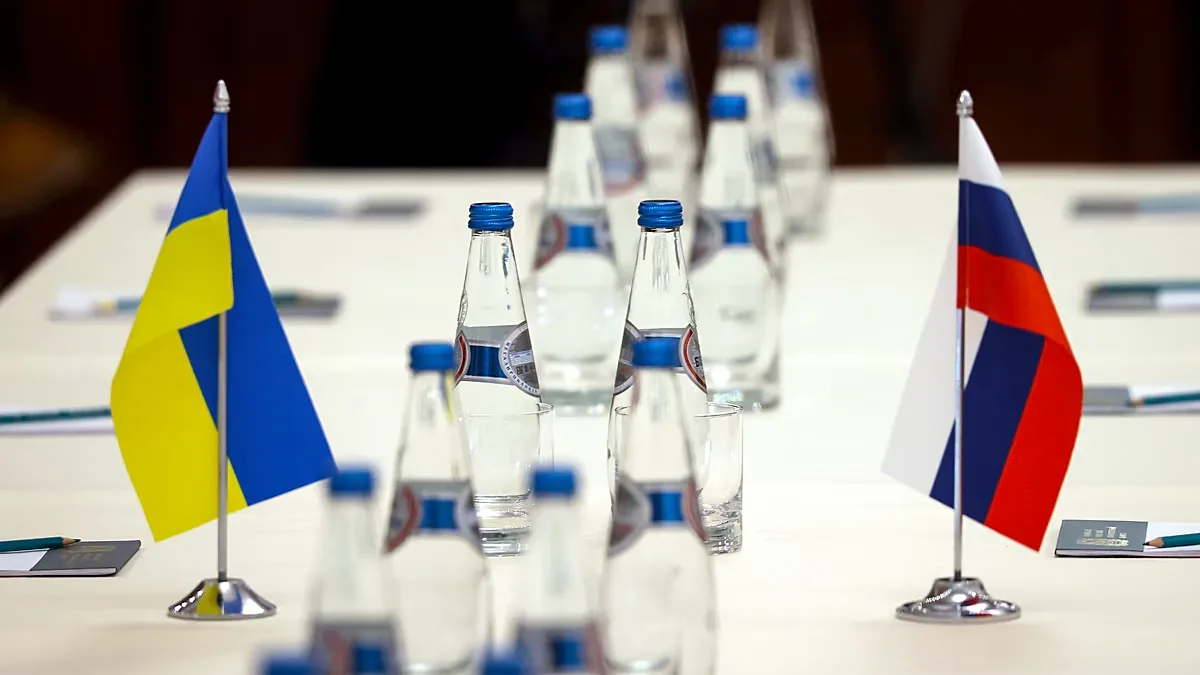
Ukraine and Russia will return to the negotiating table in Abu Dhabi on November 10–11, nine months after their last round of US-mediated talks. The composition of their delegations offers clues about what each side hopes to achieve.
Kyiv is sticking largely with the same team that took part in previous rounds, signalling continuity in its push for a ceasefire as a first step towards a broader peace agreement.
Moscow, meanwhile, is bringing senior military and diplomatic officials, including Deputy Foreign Minister Sergei Ryabkov, who helped draft Russia's sweeping security demands to NATO shortly before its full-scale invasion of Ukraine in 2022.
His inclusion raises the possibility that the Kremlin intends to broaden the negotiations beyond Ukraine to Europe's wider security architecture, particularly after US President Donald Trump suggested that an eventual agreement could extend beyond Ukraine.
Ukraine: Continuity in ceasefire push
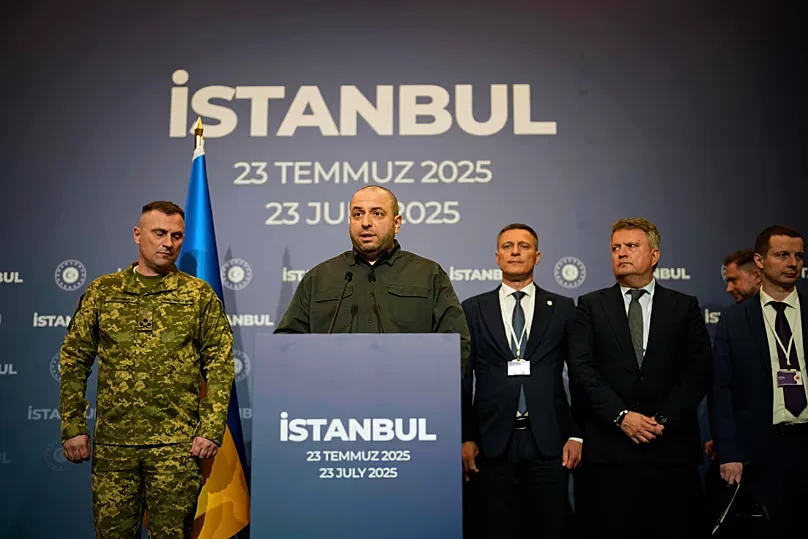
Ukraine's delegation will again be led by Foreign Intelligence Service head Rustem Umerov, who has played a central role in previous negotiations with Moscow.
He will be joined by Kyrylo Budanov, head of Volodymyr Zelenskyy's office, Davyd Arakhamia, leader of the presidential ruling Servant of the People parliamentary faction, and Serhii Kyslytsia, first deputy head of the presidential office.
Arakhamia was also in Washington last week, attending a White House meeting hosted by US First Lady Melania Trump on Thursday following the humanitarian ceasefire in Russian-occupied Oleshky.
All four took part in earlier rounds of negotiations, providing continuity as Kyiv seeks to secure a ceasefire and negotiate guarantees against renewed Russian aggression.
Ukraine has repeatedly indicated its willingness to consider different forms of ceasefire, while maintaining that any broader agreement must protect its sovereignty and provide credible security guarantees.
The largely unchanged negotiating team suggests Kyiv intends to maintain that approach rather than substantially revise its position ahead of the renewed talks.
Russia: A familiar face, with significant addition
Russia's delegation will again be led by Vladimir Medinsky, a Kremlin aide and former culture minister who has represented Moscow in previous negotiations with Ukraine.
A staunch supporter of Russia's invasion, Medinsky edited a three-volume textbook, 'Military History of Russia', published in January 2025, which portrays the war in Ukraine as a continuation of the Soviet struggle against Nazi Germany.
Aimed at schoolchildren, the book claims Russia was "forced" to invade Ukraine in February 2022 over NATO’s expansion policy and the 2014 ousting of Ukraine’s pro-Russian president, Viktor Yanukovych, which it labelled "a Western-backed coup".
The three-volume book calls Ukraine an "aggressive anti-Russian bridgehead" and emphasises "battlefield heroism" while pointing at historic parallels between modern Russian military tactics and those of the Soviet army during World War II, which Russia calls "the Great Patriotic War".
In 2014, when Russia first invaded Ukraine, Medinsky, then Russia’s culture minister, issued a document declaring that "Russia is not Europe," arguing that the rest of the continent was morally inferior.
This wasn’t the first time Medinsky tried to show Russia’s superiority to other nations. In 2013, he said that Russia’s "perseverance" in the face of all 20th-century catastrophes indicates that the Russian people "have an extra chromosome".
His return suggests continuity in Moscow's negotiating approach, but the addition of senior diplomatic and military officials raises questions about the scope of the discussions.
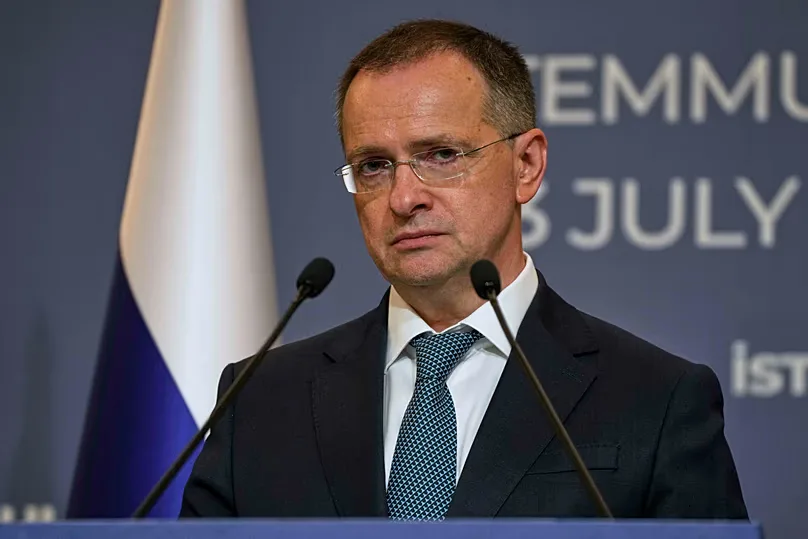
Among them is Deputy Foreign Minister Sergei Ryabkov, who is joining the Ukraine peace negotiations for the first time.
Ryabkov oversees Russia's relations with the United States, as well as arms control and non-proliferation issues, including those concerning Iran's nuclear programme.
He was closely involved in Moscow's security demands to Washington and NATO in December 2021, shortly before Russia launched its full-scale invasion.
Those proposals called for an end to further NATO enlargement, including Ukrainian membership, and restrictions on the alliance's military presence in eastern Europe, effectively seeking a rollback to its pre-1997 positions.
Moscow also demanded limits on military exercises and missile deployments, alongside restrictions on nuclear weapons stationed outside their countries of origin.
The Institute for the Study of War (ISW) has suggested that Moscow could use Ryabkov's experience with those demands to undermine Ukraine's efforts to secure post-war security guarantees.
The US-based think tank also pointed to the negotiating records of other Russian delegates, including Medinsky and Deputy Foreign Minister Mikhail Galuzin, who have previously insisted that any settlement address what Moscow calls the war's "root causes".
ISW argued that the composition of the Russian delegation raised doubts about the Kremlin's willingness to engage in meaningful negotiations.
Ryabkov's participation comes days after US President Donald Trump met Russian envoy Kirill Dmitriev at the White House on Thursday and suggested that an eventual agreement could extend beyond Ukraine.
"There's going to be an agreement. It's going to be a big agreement, and it's going to involve more than Ukraine," Trump said, adding that it could potentially involve all of Europe.
Although neither Washington nor Moscow has specified whether NATO's wider security arrangements will be on the agenda, Trump's remarks and Ryabkov's appointment have brought renewed attention to the possibility.
Russia is also sending Yuri Zhigarlovsky, deputy head of the General Staff's Main Operational Directorate, which is responsible for military planning and operations.
The Russian delegation met President Vladimir Putin on Friday during a Security Council meeting partly devoted to preparations for the talks.
The presence of senior military and diplomatic officials suggests that discussions could extend across political and security issues, although it remains unclear whether Moscow is prepared to compromise on its longstanding demands.

Comments 0
No comments yet. Start the conversation.
Leave a comment