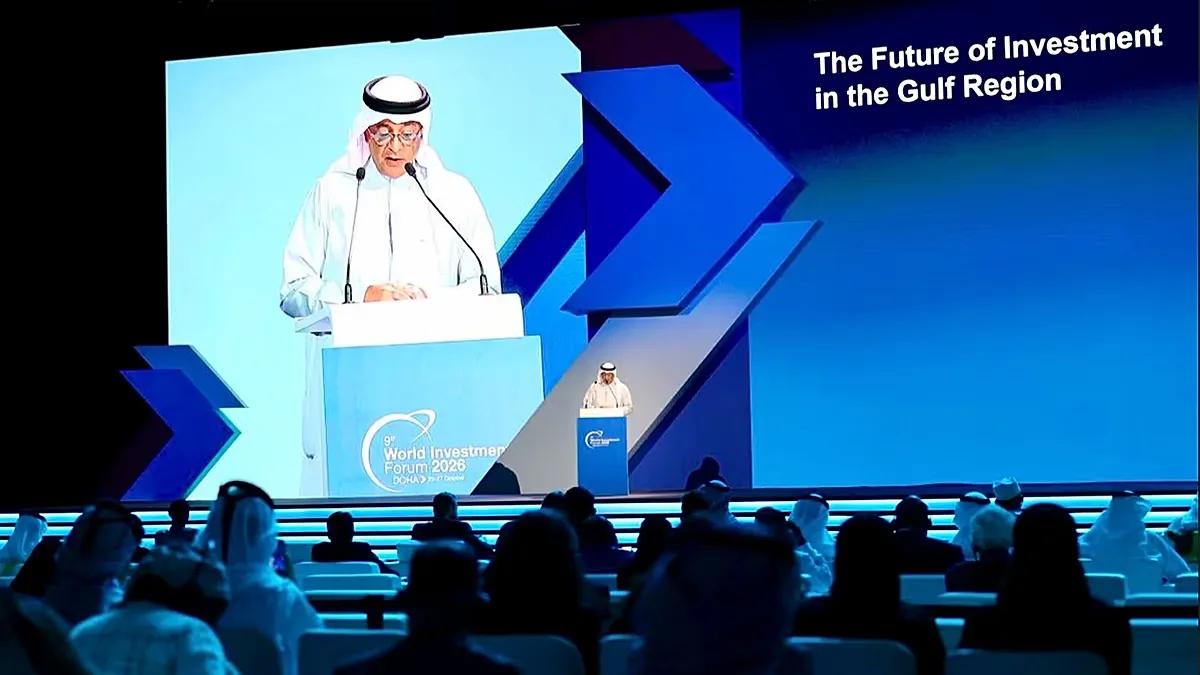
Foreign investment is rising even as the number of new projects falls, according to a UN report released during the World Investment Forum in Doha.
The ninth edition of the forum, organised by UN Trade and Development, known as UNCTAD, and hosted by Qatar, runs from 25 to 27 October. Governments, businesses and financial institutions are meeting to discuss how more countries can attract investment and turn it into jobs.
Published on Sunday, UNCTAD's Global Investment Trends Monitor found that larger transactions were helping push up investment totals, even as the number of new projects and cross-border deals fell.
In developing countries, announcements of new projects linked to sustainable development were more than 25% below 2025 levels. These are preliminary estimates, using data from the first six to nine months of 2026 to estimate a full-year total.
Investment also remains concentrated in relatively few countries.
More than 80% of global foreign direct investment went to just 20 economies last year, according to UNCTAD's World Investment Report 2026.
What investors look for
Speaking to Euronews at the forum, UNCTAD spokesperson Marcelo Risi said infrastructure, skills and reliable institutions helped explain why some countries attracted more investment than others.
"Investments are not a short-term endeavour [...] so you need to know which rules are there, who's your partner, really the rules of the game," Risi explained.
Tax incentives were only one part of the calculation, he said. Countries also need the infrastructure and trained workforce to support businesses once they invested.
Mahmoud Mohieldin, the UN special envoy on financing the 2030 Agenda for Sustainable Development, said promoting a country's opportunities was not enough to persuade investors.
"I know that governments in particular are expecting a lot from the rest of the world, but a great deal of work at home is required," Mohieldin told Euronews.
He pointed to obstacles in entering and leaving markets, unpredictable regulations and the need to prepare projects that investors could finance.
The opportunities also differ by country.
Mohieldin cited shipping and logistics in small island states, alongside Africa's young population and natural resources, as advantages that could help attract investment.
"The business environment is key. It's not enough to have the potential," he said.
In countries investors consider particularly risky, public institutions can help by sharing some of the potential losses.
Rwodah Al Naimi, director of investment at the Qatar Fund for Development, said the fund uses guarantees to encourage private investment, while setting limits on its commitments to protect its own funds.
It also shares the financing with other institutions, working mainly through international development banks.
"We don't go alone. It has to be co-financed as well with other entities," Al Naimi told Euronews.
Job creation is one of the fund's main measures of whether its investments were benefiting people.
"So any type of investment that we deploy, we always make sure that there is a job creation element," she explained.

Comments 0
No comments yet. Start the conversation.
Leave a comment