Adapted from previously published coverage.
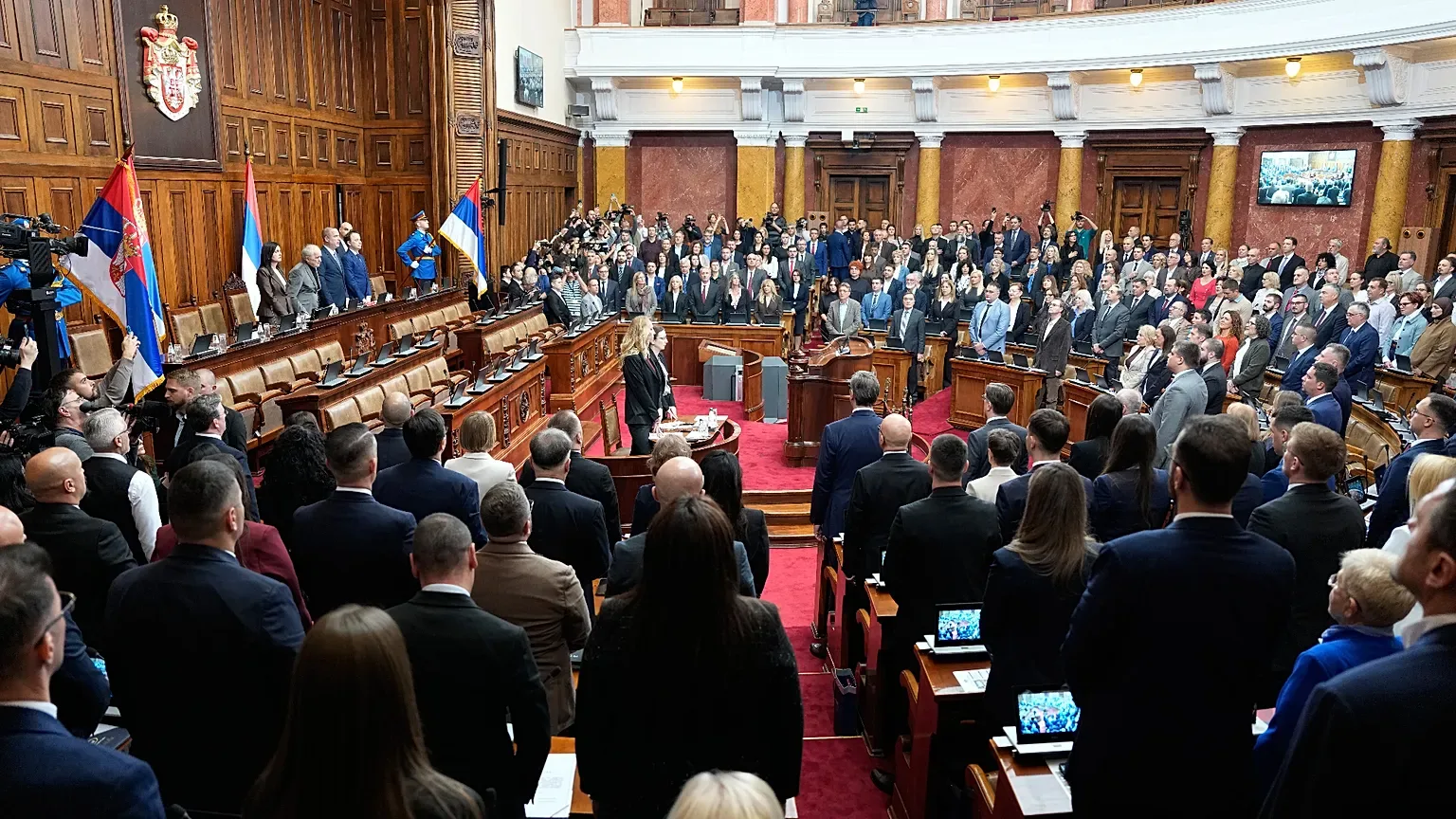
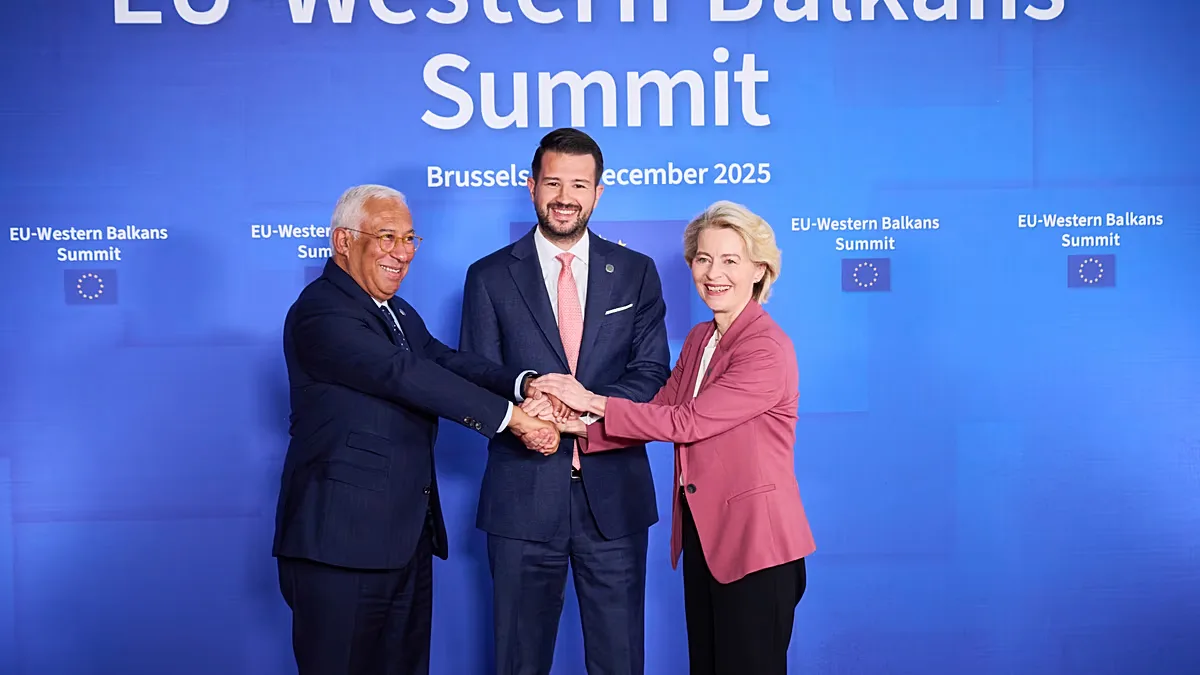
The interview on Europe Today, Euronews' morning show, aired on the day of the EU-Western Balkans summit, which Serbia's speaker of parliament and acting president, Aleksandar Čupić, was expected to attend but ultimately could not, informing the European Commission of his absence.
Asked why Brussels should believe that Serbia's new political leadership is serious about European integration if it could not be represented at such an important gathering, el Sarag said the country's parliamentary proceedings had to take priority.
"Because today we have to finish a constitutive session and that is our priority right now. And I hope it will finish today and the call for him is going to repeat again. It's nothing personal. We have to do this kind of thing first," she explained, adding that she was sorry about the absence.
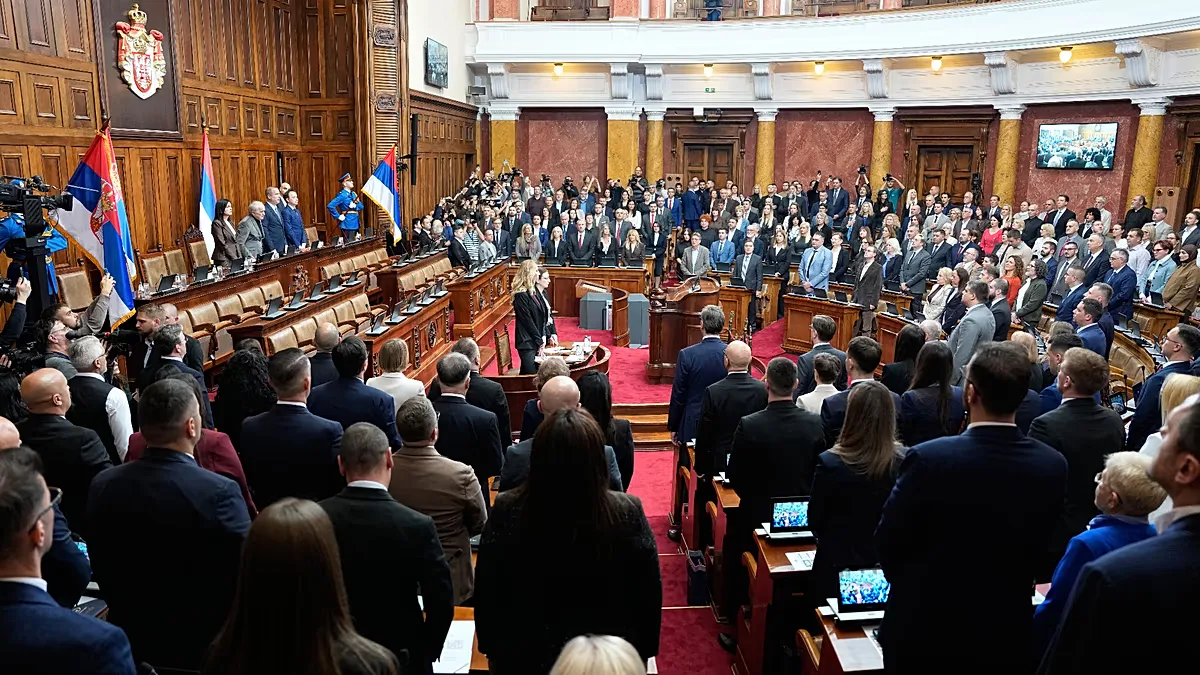
The reason for the absence is technical in nature. Aleksandar Čupić is currently the only official from the new administration to have been elected to his position as speaker of parliament and to be serving as acting president of the republic, given that Aleksandar Vučić submitted his resignation in September. Simply, there is no one who can come.
Asked whether the European Union was genuinely committed to admitting new members or whether enlargement was increasingly becoming a political slogan, el Sarag argued that political changes were already taking place in Serbia, although more time would be needed to demonstrate the direction of the new leadership.
"I think that we changed something, we changed the mind in the people's head in Serbia, which is something new in the political scene. And I think we need a little time to prove where we are going," she said.
However, questions about Serbia's future foreign policy alignment with the EU revealed some of the uncertainties surrounding the Students' List's position. Asked whether Serbia would align its foreign policy with Brussels, including imposing sanctions on Russia, or continue balancing its relations between Brussels and Moscow, el Sarag rejected the premise of the question.
"I think that question is not correct, because we don't want to make enemies. We want to be friends with all countries, if it's possible, of course," she said.
When pressed on how Serbia could become an EU member while maintaining relations with Russia, whose president, Vladimir Putin, is regarded by the EU as a major threat to European security, el Sarag questioned why European integration should require Serbia to make enemies.
"I'm a lawyer, you know, and that kind of question, I don't know why we must be enemies with somebody if we are including in European Union. Why we must take the side," she responded.
After the interviewer pointed to Russia's actions against European countries, including alleged violations of airspace and hybrid attacks, and asked whether Serbia intended to join the EU while maintaining close ties with Putin, el Sarag clarified that she had not advocated such a position.
"No, I didn't say that. I think that we are going to make some kind of solution in the future in that question," she said, without specifying what such a solution might entail.
The Kosovo issue also exposed the lack of a clearly articulated position. Asked whether Serbia would be prepared to fundamentally change its stance on Kosovo as part of the process of normalizing relations, a key element of its EU accession path, el Sarag said the decision should come from the citizens rather than the Students' List.
"I think that people from Serbia are going to give that kind of answer, not me or nobody from the Student's list," she said.
When asked what she believed that answer would be, she added: "I don't know, we are in the parliament for five days, but I think Kosovo is Serbia."
Confronted with the observation that people in Kosovo and EU institutions hold a different position, el Sarag maintained that there was no need to rush the discussion.
"We will see, don't hurry, we are not in hurry now," she concluded.
The interview highlighted the challenges facing Serbia's new political representatives as they seek to establish their position on European integration. While el Sarag expressed confidence that political attitudes in Serbia were changing and stressed the importance of maintaining friendly relations with all countries, her answers left several key questions unresolved, particularly regarding alignment with EU foreign policy, relations with Russia and the future of dialogue with Kosovo.
The road ahead for relations between Serbia and the European Union is likely to be a particularly bumpy one, regardless of the political changes currently taking place in Belgrade. Two major issues will continue to dominate the relationship and remain the proverbial elephants in the room: Kosovo and Serbia's refusal to impose sanctions on Russia. On Kosovo, there is no indication that Serbia is prepared to recognize its independence, while Brussels continues to insist on substantial progress towards the normalization of relations.
On Russia, Serbia's unwillingness to align with EU sanctions following the invasion of Ukraine represents an equally serious obstacle, particularly as Brussels increasingly expects candidate countries to demonstrate a clear geopolitical commitment to the Union.
However, the difficulties will not be limited to foreign policy. The student movement, which has emerged as a significant political force in Serbia, is itself deeply suspicious of the European Union and, in particular, of Brussels' previous relationship with Aleksandar Vučić and his government. There is a widespread perception among the movement's supporters that EU institutions, and particularly the European Commission, were willing to turn a blind eye to the nature of Vučić's rule in the interest of maintaining political stability and preserving their relationship with Belgrade. For approximately 14 years, Brussels maintained close political relations with Vučić, despite mounting concerns about the state of democracy, media freedom, electoral conditions, institutional independence and the concentration of power in Serbia.
In this respect, it is important to distinguish between the positions of the different EU institutions. The European Parliament was consistently much more critical of the Serbian authorities, raising concerns about democratic backsliding and electoral irregularities and repeatedly calling for greater accountability. The European Commission, by contrast, generally adopted a considerably more accommodating approach, maintaining political engagement with Vučić's government and repeatedly assessing that Serbia had met the technical conditions for opening the next negotiating clusters.
Indeed, the Commission maintained for several consecutive years that Cluster 3, covering competitiveness and inclusive growth, was technically ready to be opened. Yet the European Council, where the member states ultimately make the political decisions on enlargement, never gave the green light to its opening. This created a rather contradictory situation in which the Commission continued to signal that progress was technically possible, while the member states were unwilling to translate that assessment into a political decision.
Consequently, the student movement inherits a complicated relationship with Brussels: it needs the EU politically, economically and institutionally, but it also has reasons to question the credibility and consistency of the Union's previous engagement with Serbia. The EU, for its part, will also have to accept that a new political generation in Serbia may be considerably less willing to accommodate Brussels' expectations without questioning the Union's own record and political choices.
Comments 0
No comments yet. Start the conversation.
Leave a comment