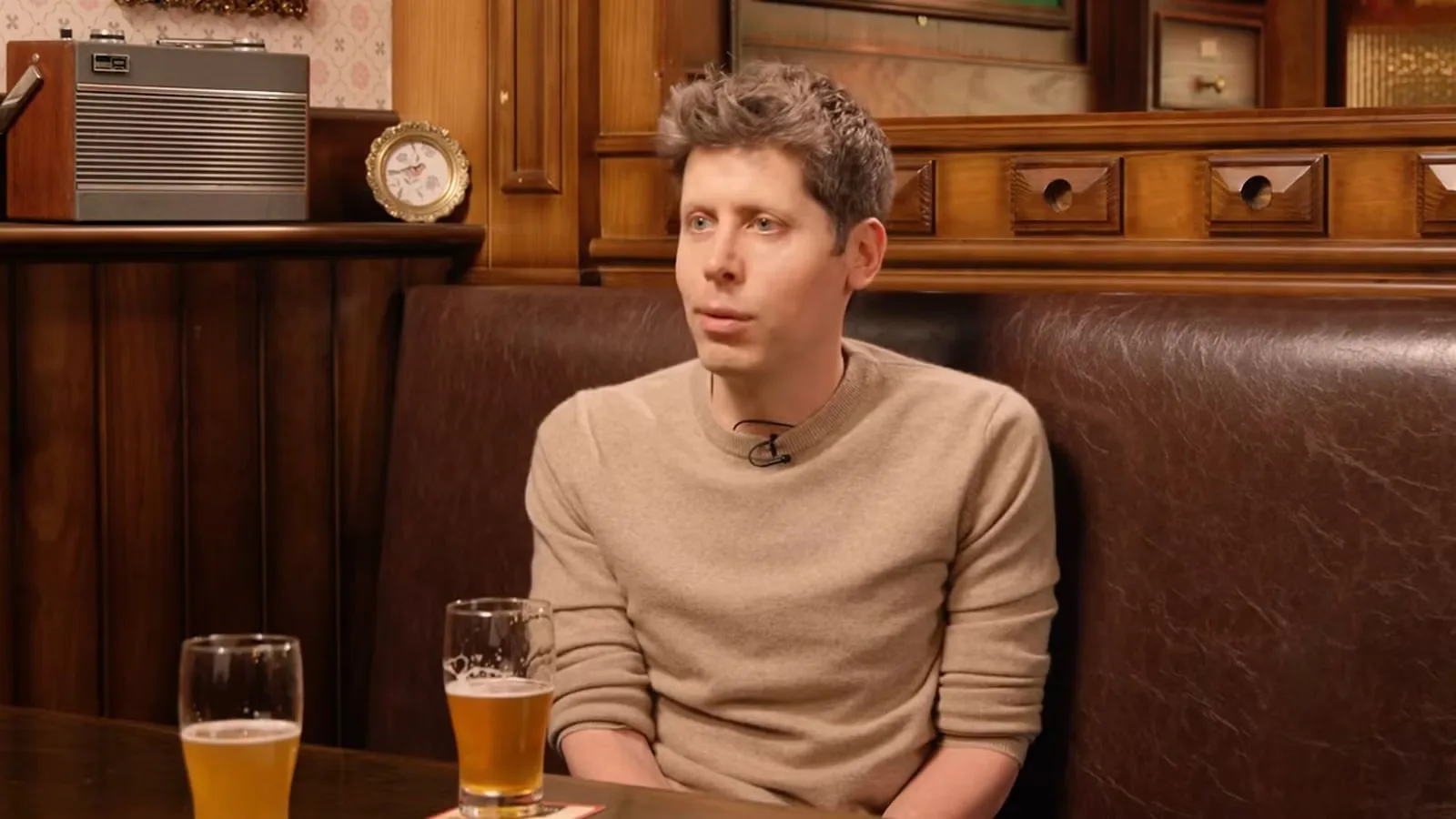
Here's a fun fact: from now until 2029, OpenAI owns 40% of the world's supply of Dynamic Random Access Memory (DRAM), which powers cell phones, video game consoles, and artificial intelligence. The ChatGPT maker is thus one of the key reasons you have to pay $650 for a PS5 now, and why no one can affordably build a new gaming PC. Somehow, OpenAI CEO Sam Altman thinks that percentage isn't enough.
If you ask Altman, all of us — the peons, alongside his $852 billion company — have a shared interest. In a casual interview with YouTube channel Cheeky Pint, Altman explained that the world is already limited in its silicon-producing capacity.
"From a global allocation perspective, actually, it's quite terrible to have everybody have a bunch of the world's limited supply of DRAM sitting on their own computer — and being used 5% of the time."
Altman argues that, given the existing constraints, it would be more useful for the DRAM people have lying around in their electronics to power data centers. That way, everyone can take advantage of the aggregate computing power.
"You want maximum utilization in the cloud if you're trying to deal with this very supply-constrained environment," Altman said. "And somehow, people's intuition is the opposite of that."
From ChatGPT to PS5
Altman's argument, which conveniently sidesteps OpenAI's role in creating the scarcity problem in the first place, has been met with incredulity by pundits and YouTube commenters. However, Sony agrees with him, which is why the hardware maker plans to end Blu-ray support in 2027 and produce only fully digital PS5s.
As users figure out ways to jailbreak hardware and AI accelerates the process of game creation, companies like Sony have an added incentive to create an environment where individual users own as little as possible. You can't easily steal or reverse engineer something streaming from the cloud, while companies can control how much you pay for access to that content. Altman's just saying the quiet part out loud.
Later, Altman says he hopes the costs of energy, supply, and production will fall soon. "If it doesn't go down, I'll be very sad. But for it to go down, given how much value there is in this, supply's got to go way up."

Comments 0
No comments yet. Start the conversation.
Leave a comment