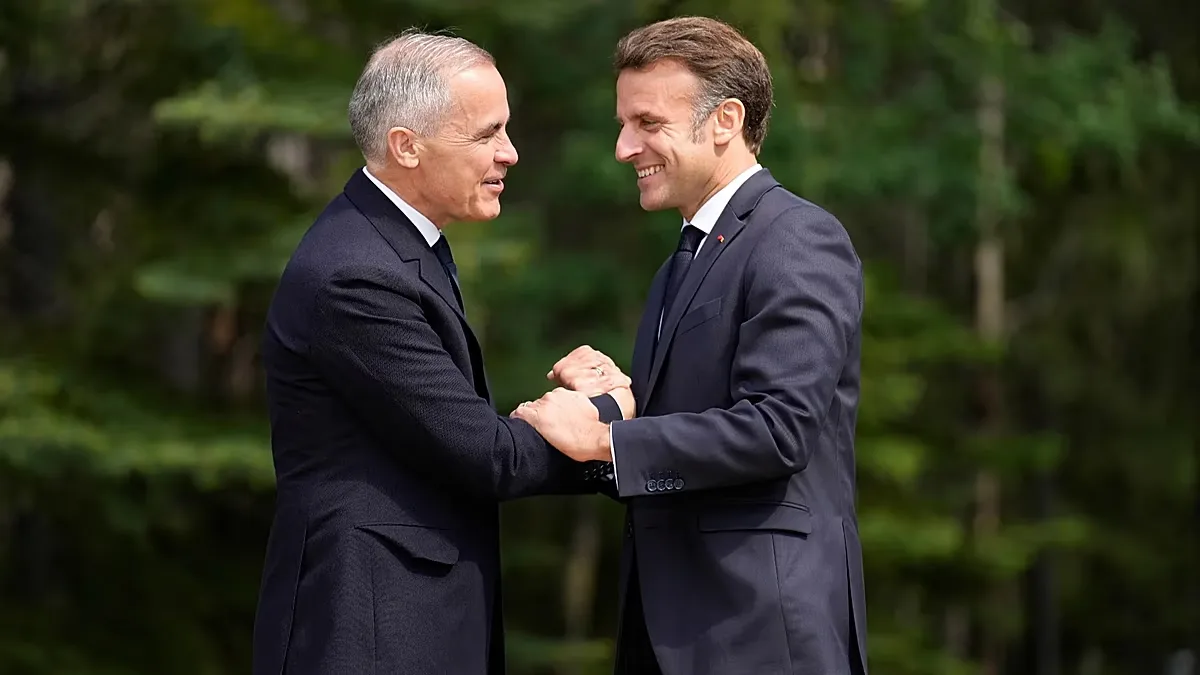
French President Emmanuel Macron is travelling to Saint Pierre and Miquelon this weekend to discuss the future of the archipelago, as well as France's geostrategic presence in the North Atlantic, maritime sovereignty and cooperation with Ottawa.
The last French president to make a trip to the overseas collectivity, which is located some 20 kilometres off the Canadian province of Newfoundland and Labrador, was François Hollande back in December 2014.
Eleven years on, Macron will be there on Sunday alongside Mark Carney, the Canadian prime minister.
Their meeting comes amid Carney's apparently blossoming relationship with Brussels and European Commission President Ursula von der Leyen's proposal to make Canada an associate member of the EU.
An archipelago 'central to today's France'
The key goal of the trip is to "deliver a message (...) about France's presence across five oceans," the French presidency said during a telephone briefing with the media, including Euronews. France has a presence in the Atlantic, Indian and Pacific oceans, as well as "in the Arctic, through Saint Pierre and Miquelon" and in the Southern Ocean.
Located at the gateway to the Arctic, Saint Pierre and Miquelon gives France a significant exclusive economic zone and allows it to maintain a military presence there.
That presence is partly provided by the Fulmar, a navy patrol vessel and the only French military ship permanently based in the archipelago, which is due for replacement.
Saint Pierre and Miquelon is not a peripheral outpost, the Élysée stresses, but "a territory, an archipelago that is central to today's France."
During the presidential visit, questions of sovereignty will also be discussed in relation to digital cables and connections linking the archipelago and the European continent, as well as space-related activities, where further investment is expected.
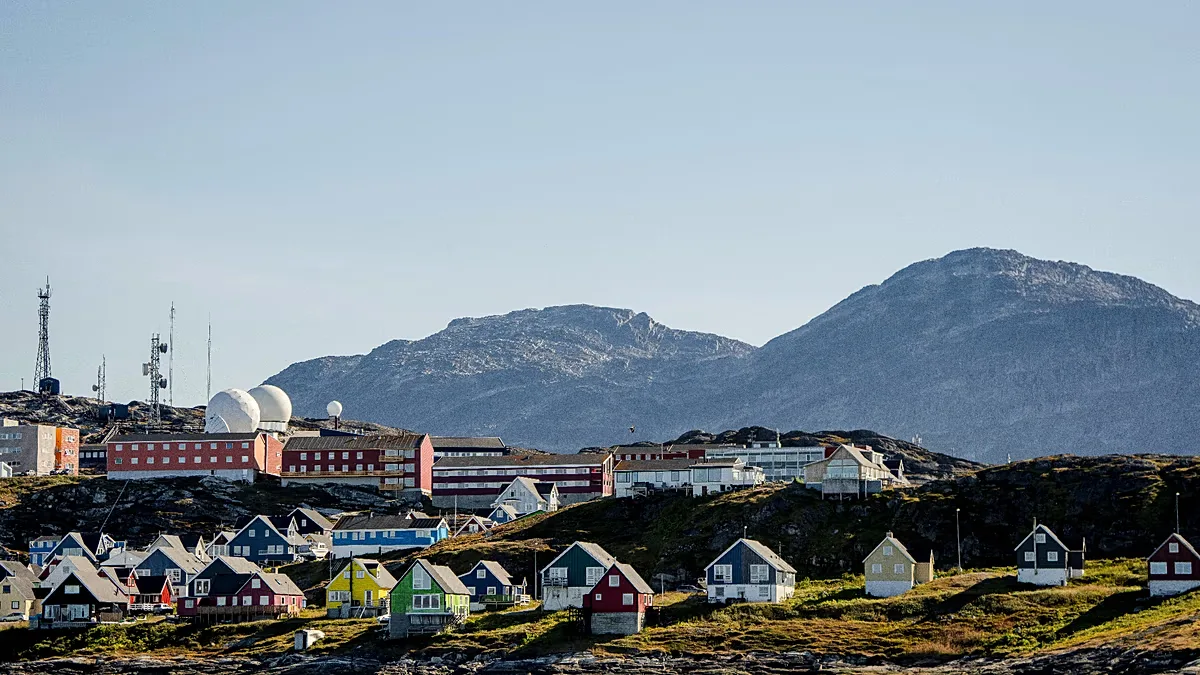
Another item on the agenda will be regional cooperation. Paris wants to turn Saint Pierre and Miquelon into a "rear base for polar cooperation," working not only with Canada but also with Denmark and Greenland.
The president is also expected to focus on the day-to-day difficulties faced by residents.
Saint Pierre and Miquelon is grappling with economic and social problems similar to those seen in many isolated territories around the world while also experiencing the effects of climate change.
The archipelago's population is also declining. The biggest blow came with the collapse of the fishing industry following years of a Canadian moratorium on cod fishing. France also saw its exclusive economic zone there reduced following a court ruling in 1992.
Another threat facing the territory is rising sea levels. The village of Miquelon-Langlade, located on a narrow strip of sand just two metres above sea level, is being moved farther inland. It is the first relocation project carried out in France in response to the effects of global warming.
Canada, a new energy partner?
Paris supports closer ties between Brussels and Ottawa and has reiterated its willingness to work with all countries that "share our values and want to strengthen their ability to decide, produce and act for themselves."
The practical details of this new partnership, however, have yet to be worked out.
Energy could become one of its main areas of focus.
France is looking to Canada to help secure European supplies of hydrocarbons, at a time when fuel prices are soaring due to global conflicts and tensions surrounding the Strait of Hormuz.
This situation is already putting additional pressure on France's heavily indebted public finances, forcing the government to extend some existing measures and step up talks with partners, particularly in the Middle East.
Macron and Carney are due to continue their talks next week in New York, on the sidelines of the United Nations General Assembly.
Comments 0
No comments yet. Start the conversation.
Leave a comment