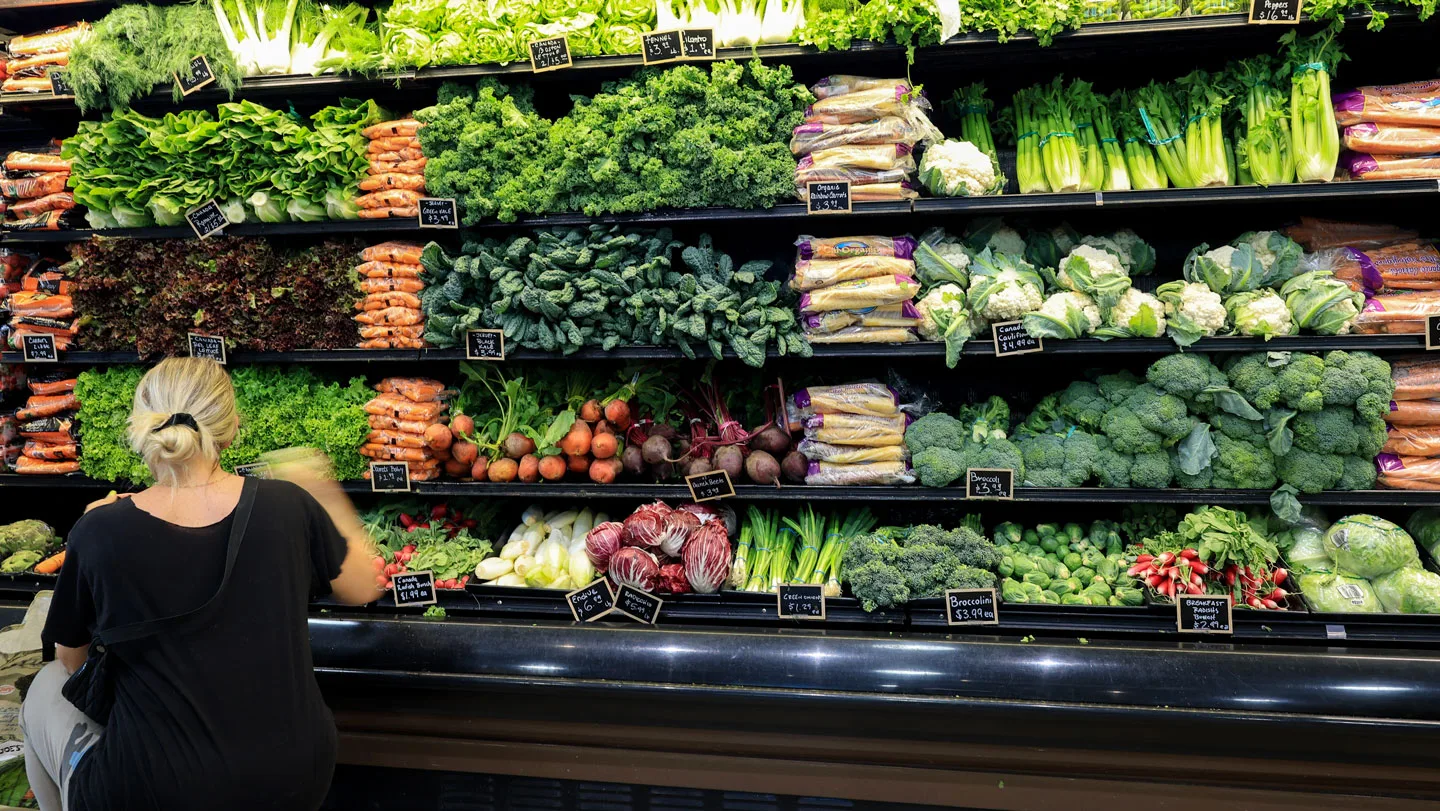
Here’s a new reason to eat your beans and greens.
A high-fiber diet may help sweep plastic particles from the gut, researchers report October 15 in Nature Communications. In mice that ingested plastic, eating loads of fiber daily kept the particles from piling up in the intestines. The finding hints at fiber’s power to protect the body from environmental garbage, says Eddy Y. Zeng, an environmental scientist at South China University of Technology in Guangzhou.
Researchers have long known that fiber can improve our health, in part by lowering cholesterol, keeping blood sugar levels in check and easing food through the gut. But now, Zeng says, his team’s results suggest an additional benefit.
We live in a world littered with plastic, much of it too small to see. These micro and nanoplastics, shed by disposable water bottles, fast food containers and other worldly junk, can make their way into our bodies. It’s not completely clear what such shards do to our health, but we have some hints. Scientists have linked plastic particles in people’s arteries to increased risk of heart attack and stroke. And mice that ingest tiny bits of plastic can show signs of organ injury.
Zeng’s team thought dietary fiber might provide some defense. Fiber forms a complex network of polymers that could trap ingested plastics like flies in a spider web, he says.
The researchers put mice on low-, medium-, or high-fiber diets, then fed them plastic particles. Over the next 24 hours, the medium- and high-fiber groups of mice cleared more particles from their bodies than their low-fiber counterparts, the team discovered. That’s important, Zeng says, because these particles can do damage. After a week of daily plastic feedings, his team saw gut tissue damage — but only in the low-fiber group. Experiments in test tubes suggest that fiber physically wraps around and sticks to plastic particles.
It’s too soon to say if dietary fiber does the same in humans. Zeng’s study was performed in mice and not tethered to realistic fiber numbers. Though mice in the high-fiber group ate far more fiber than what what’s recommended for people, he thinks the findings are worth pursuing in follow-up studies.
And even if fiber doesn’t end up purging plastic from people’s guts, Zeng says, it probably wouldn’t hurt for us to add a little more to our diets.


Comments 0
No comments yet. Start the conversation.
Leave a comment