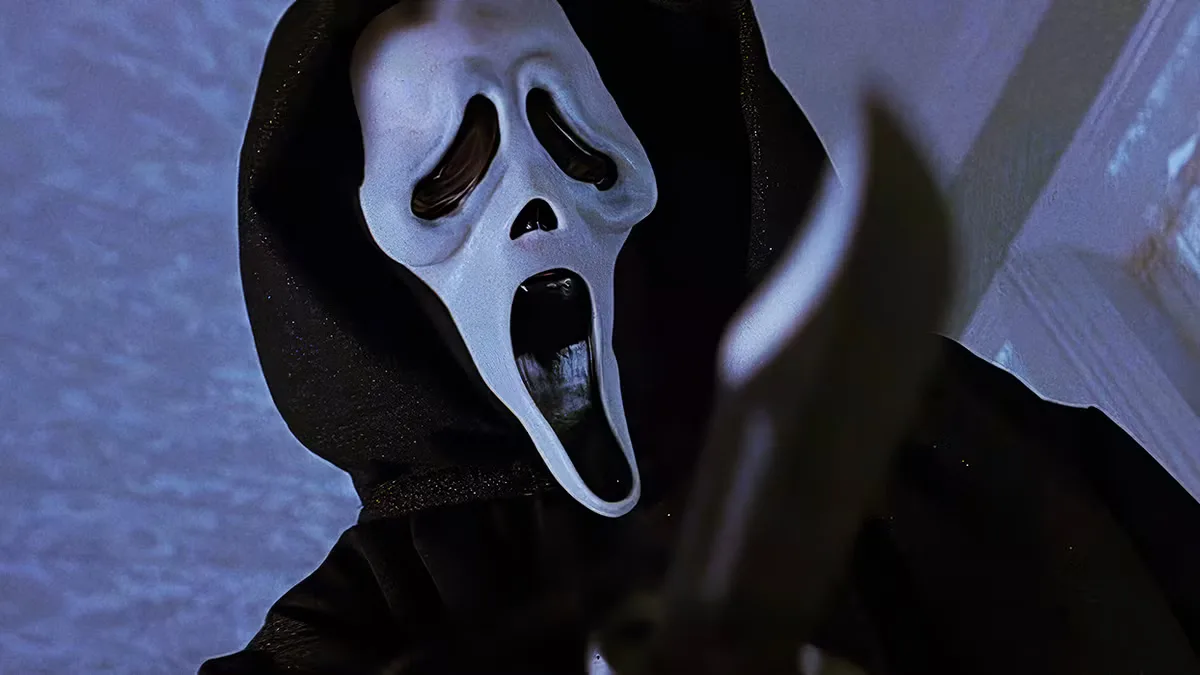
Returning to a horror franchise means finding another reason to put its survivors through hell. Audiences want familiar faces back, but familiarity can become a problem when a sequel starts repeating the movie they already love. Scream built an entire franchise around that tension, letting its characters recognize the rules even when knowing them wasn’t enough to stay alive.
Wes Craven and Kevin Williamson understood that bringing Ghostface back required something new to say. Sequels gave the killer another set of conventions to exploit, while the prospect of a trilogy made surviving the previous movies considerably less reassuring. By the time Hollywood’s appetite for remakes offered another target, the franchise had a reason to revisit its own beginnings. Whether that opportunity excited everyone making the movie is another question.
Composer Marco Beltrami says he felt Craven didn’t want to make Scream 4, which became the director’s final movie. In a recent interview, Beltrami described his own reluctance to work on the 2011 sequel and suggested Craven shared it. He characterized the production as driven by studio pressure and called it “uninspired,” making a blunt assessment from someone who helped establish the franchise’s musical identity. Craven’s own explanation of why he returned paints a different picture, however.
Wes Craven Said Kevin Williamson’s Story Convinced Him to Make ‘Scream 4’

Speaking with JoBlo in 2011, Craven acknowledged that he’d questioned whether returning would be good for him after the original trilogy. He wanted to make other kinds of movies, and spending time away from Ghostface gave him that opportunity. A decade later, however, the idea had become more appealing. Williamson’s pitch sold him on the sequel, with Craven explaining that “at that point I didn’t have any doubts at all.” That doesn’t sound like a director who rejected the project from the beginning, but getting excited about a story and enjoying the production are different things.
Craven described contributing his own writing and extensive script notes, as well as arguing with Bob Weinstein over creative decisions. He also credited Weinstein with ideas that helped the movie, making their working relationship sound contentious, but not entirely unproductive. His account leaves room for frustration, even alongside his enthusiasm for the original concept.
Beltrami’s recollection is valuable because he was part of that collaboration, but it can’t tell us everything about Craven’s intentions. The director’s own words suggest he believed there was a good movie to make when he signed on. Whether that enthusiasm survived every disagreement is harder to establish. The two accounts offer different perspectives on the experience, and neither requires treating a difficult production as proof that the idea was worthless.

Comments 0
No comments yet. Start the conversation.
Leave a comment