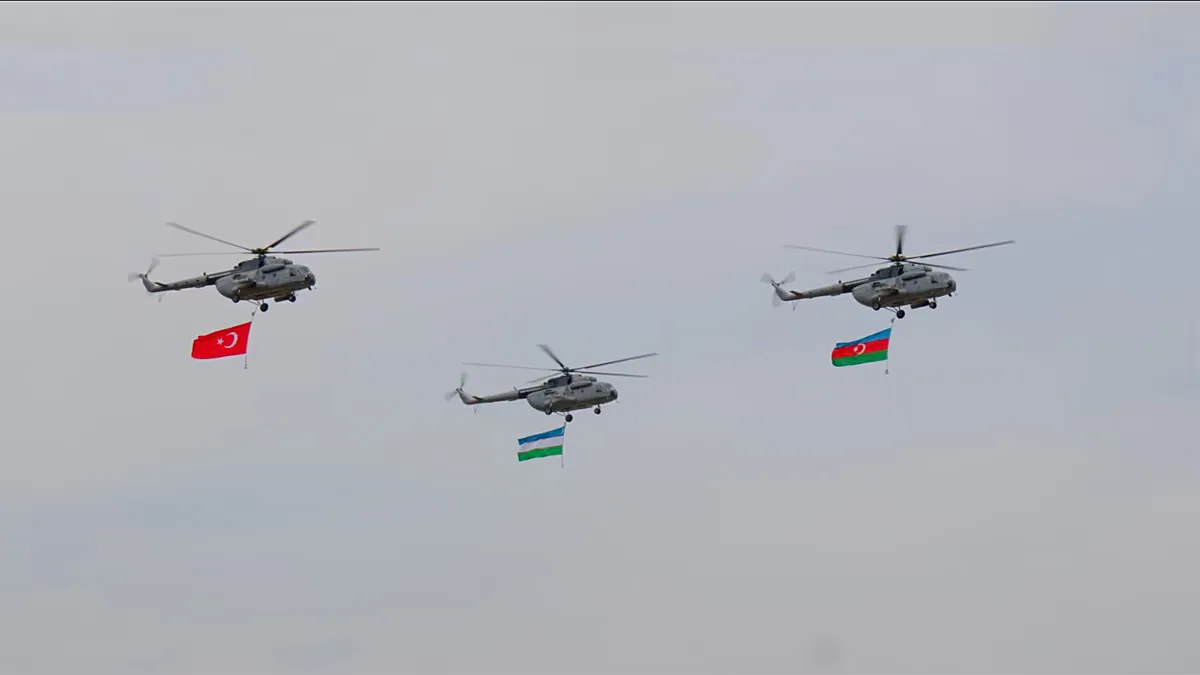
Mass drone attacks, cyberattacks, disinformation and an attempt to seize a vessel were among the scenarios that Azerbaijani, Turkish and Uzbek troops rehearsed together for the first time in Azerbaijan over recent days, identifying current threats facing the armed forces of these countries amid current geopolitical shifts.
More than 3,500 troops from the three countries took part in the "Power of Unity-2026" exercise, held for the first time in the Hojavend district of Azerbaijan's Karabakh region.
Turkish Defence Minister Yaşar Güler stressed the need for military readiness, saying "we will prepare in the best possible way, but we will live in peace," and praised the exercise's success "in both its planning and execution".
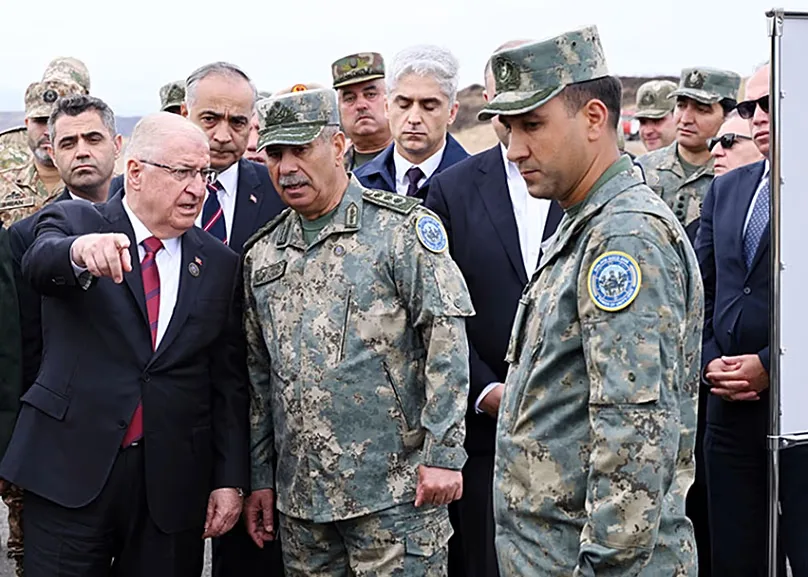
The simulated training ranged from drone warfare and electronic attacks to border incidents and operations at sea, in a new approach to military preparedness.
At the Qızılqaya military training area, troops used more than 130 unmanned vehicles, along with over 70 armoured vehicles, more than 90 artillery systems and over 20 aviation assets.
Drones featured heavily in the training as a sign of evolving warfare, with troops practising repelling drone swarm attacks, strikes on advancing military columns, surveillance and the delivery of ammunition and supplies.
The drills combined unmanned systems with artillery, armoured vehicles, aviation and electronic warfare. Troops also practised breaching defensive positions and anti-tank trenches, clearing minefields and advancing with armoured vehicles.
Beyond the conventional battlefield
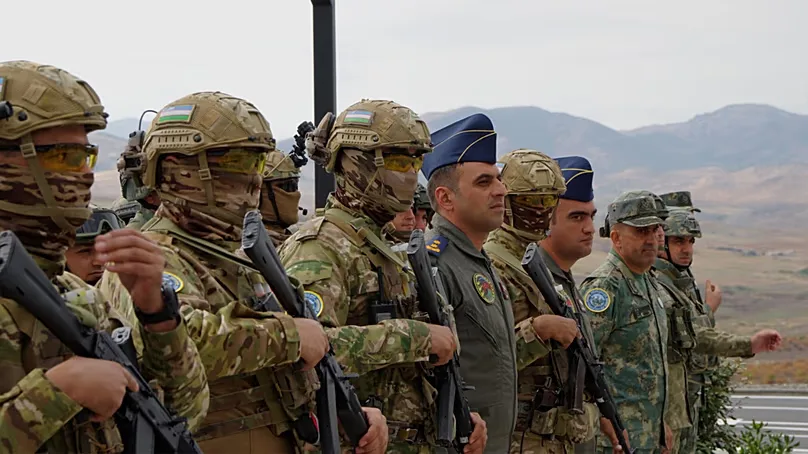
The training also focused on new challenges that have not previously been part of traditional military scenarios.
Troops responded to simulated cyberattacks and online disinformation, carried out operations against "terrorist" positions in mountainous terrain, and practised clearing settlements and setting up checkpoints.
Training also involved using drones to detect and stop attempted border crossings.
Azerbaijan's Defence Minister, Colonel General Zakir Hasanov, said the exercise included land, naval and air operations that help raise the combat readiness of the participating armies.
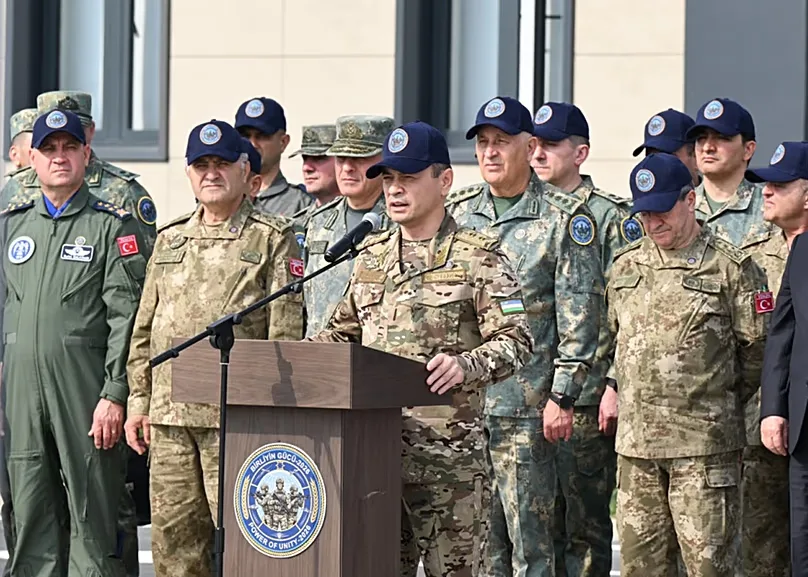
Uzbekistan's Defence Minister, Lieutenant General Shukhrat Kholmukhamedov, said participating personnel had demonstrated "high combat readiness" and the ability to carry out missions together.
From the border to the Caspian Sea
The scenarios extended beyond land operations into the Caspian Sea, with forces practising freeing a vessel and an offshore facility, rescuing hostages and landing on the ground to neutralise a simulated terrorist base.
The exercise was held at training areas in Baku, the Karabakh region, Nakhchivan and Azerbaijan's part of the Caspian Sea.
Azerbaijan and Turkey describe their defence relationship as an alliance under the 2021 Shusha Declaration. Azerbaijan and Uzbekistan have also expanded cooperation in military, defence-technology and military education.
Kyrgyzstan, Pakistan, Serbia, Slovakia, Tajikistan, Georgia, Turkmenistan and the United Arab Emirates, as well as Iran, attended the exercise as observers.
From Qızılqaya to Shusha
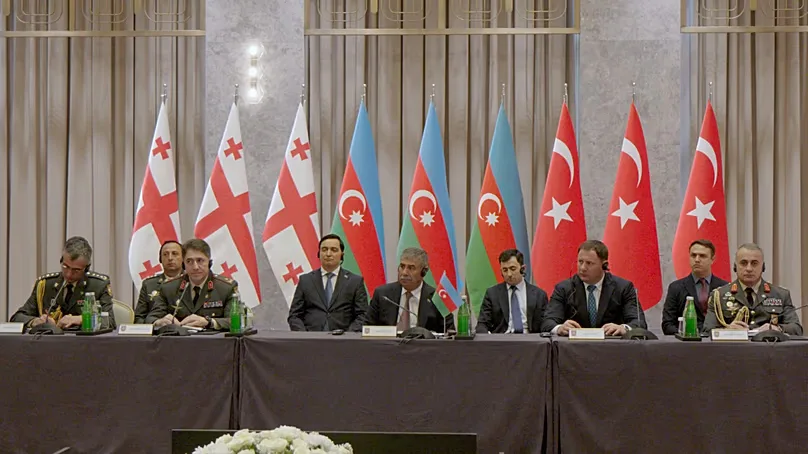
The military exercise was followed by a trilateral meeting of the defence ministers of Azerbaijan, Turkey and Georgia in Shusha.
Azerbaijan's Defence Minister Colonel General Zakir Hasanov, Türkiye's National Defence Minister Yaşar Güler and Georgia's Vice Prime Minister and Defence Minister Irakli Chikovani took part in the 13th trilateral defence meeting, which focused on military cooperation, regional security and trilateral ties.
Hasanov described Azerbaijan-Georgia-Turkey cooperation as "an important platform for regional stability, security, and development".

Comments 0
No comments yet. Start the conversation.
Leave a comment