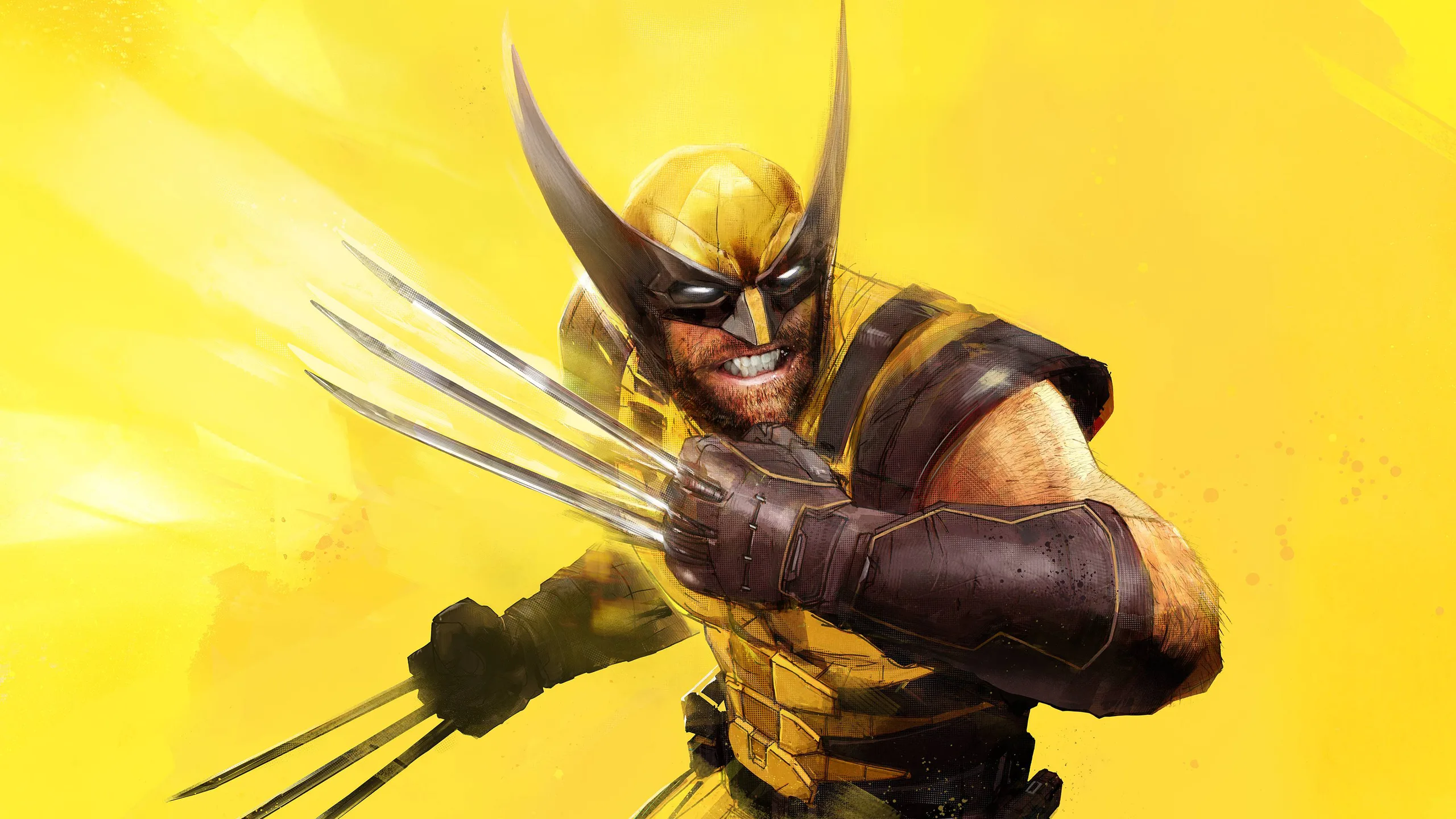
But bloodshed alone cannot sustain an entire adventure. The game is at its most compelling when it looks beyond the claws and explores Logan’s struggle to accept himself. His personal history, conflicting instincts, and relationships give this interpretation of Wolverine genuine emotional weight. Unfortunately, the initially satisfying combat loses much of its appeal before the campaign reaches its conclusion, leaving the story to carry more than it comfortably can.
There is a sturdy foundation here: responsive action, excellent animation, and a strong central performance. What is missing is the variety and meaningful progression needed to build those strengths into something exceptional.
Story: A Personal Journey Beneath a Larger Threat
The story begins decades after James Logan Howlett first encountered Nathaniel Essex and joined his mutant community, eventually becoming an important member of Team X. By the time the campaign opens, Logan is already an experienced operative, but something is clearly wrong beneath the surface.
An investigation involving missing mutants soon takes him around the world. Some destinations introduce fresh dangers, while others bring him back to places tied to memories he would rather leave buried. The larger mystery provides the momentum, but Logan’s confrontation with his own past gives the journey its emotional purpose.
As a superhero adventure, the plot is solid rather than groundbreaking. A few developments are predictable, although the closing hours deliver some genuinely entertaining moments. Its greater weakness is how unevenly the story is integrated into the missions. Most important developments happen in the cutscenes that introduce or conclude each assignment, while the action between them contributes comparatively little.
The result is a campaign that repeatedly pauses its storytelling to make room for combat, then pauses the combat to resume its storytelling. The individual scenes often work, but the overall rhythm rarely feels seamless.
Logan and Jean Give the Game Its Heart
Liam McIntyre’s performance is one of Wolverine’s strongest assets. His Logan has the physical presence and rough edges expected of the character, but there is vulnerability beneath that imposing exterior. He feels like more than an angry man waiting for the next excuse to draw blood.
Much of his appeal comes from the tension between compassion and instinct. Logan wants to connect with people and act with humanity, yet his animal nature is never entirely under control. His past complicates those efforts, while the future of mutantkind gives him something beyond himself to fight for.
The quieter exchanges are often more memorable than the spectacular violence. Jean is especially important to that balance, providing an emotional connection that keeps the story from settling into routine comic-book territory. Their relationship gives Logan room to be uncertain, sympathetic, and unexpectedly gentle without making his brutality feel like it belongs to an entirely different character.
The writing deserves credit for holding those extremes together. Tender conversations and savage combat sit alongside one another without completely undermining the emotional credibility of either.
Insomniac also shows a willingness to reinterpret familiar material rather than simply reproduce it. The relationship between Logan and Jean occasionally borrows elements associated with Cyclops, a choice that may divide fans but gives this adaptation a distinct perspective. The central pairing remains the strongest part of the character work.
The supporting cast is less fortunate. Beyond Logan and Jean, few characters receive enough space to develop meaningful arcs of their own. Many briefly obstruct Wolverine, assist him, or offer advice before leaving the spotlight. The restrained ensemble helps preserve the story’s personal focus, but it also leaves much of the surrounding cast feeling underdeveloped.
Combat: Responsive, Aggressive, and Wonderfully Brutal
At first, controlling Wolverine feels excellent. Basic attacks flow smoothly into combinations through the square and triangle buttons, with dodges, parries, and special abilities rounding out an accessible set of tools. Inputs are responsive, and Logan’s ability to leap toward nearby enemies makes it easy to maintain pressure.
The system encourages aggression. Staying on the offensive fills the rage bar more quickly, enabling devastating critical hits and providing the reassurance of a revive. Logan’s healing factor also restores health over time during combat, removing the need to interrupt a fight by searching the arena for medical supplies.
That is a particularly effective adaptation of the character’s abilities. Wolverine should be pushing through punishment, not desperately circling a room for a health pack. Regeneration supports that fantasy while keeping the action moving.
The trade-off is that the system is neither especially complicated nor particularly unforgiving. Its appeal comes primarily from the immediacy of the action and the pleasure of delivering each hit, rather than from mastering an intricate set of mechanics.
The animation work makes a substantial contribution to that pleasure. After years of ensuring Spider-Man’s enemies did not fall to their deaths, Insomniac clearly embraces the opportunity to show what happens when a superhero has no such restraint. Severed limbs, vicious stabs, and elaborate finishers give the combat an unmistakable identity.
The claws look dangerous, the impacts feel forceful, and the sheer variety of gruesome outcomes keeps individual takedowns entertaining. As a visual expression of Wolverine’s destructive power, the game gets a great deal right.
Progression Does Not Keep Pace with the Campaign
The problem is that the excitement begins to fade around the midpoint of the roughly 15-hour campaign. By then, the combat has revealed most of its possibilities, yet there are still hundreds of enemies left to defeat.
Additional skills and special abilities offer some variety, but there are relatively few of them, and many become available early. Spinning through a crowd with claws extended is entertaining, as is kicking an opponent off a rooftop or cliff. These moves provide satisfying flourishes without significantly changing the decisions made during a fight.
What is missing is a convincing sense of evolution. The game rarely asks the player to reconsider familiar tactics or develop a substantially different approach as Logan’s abilities expand. The combat remains functional and fluid, but its later encounters do not feel sufficiently different from its earlier ones.
That places a great deal of responsibility on enemy variety and encounter design. One of those elements occasionally rises to the challenge. The other too often reinforces the repetition.
Enemy Variety Cannot Rescue Predictable Encounters
New enemy types arrive at a steady pace, ranging from technologically equipped soldiers to the Hand’s ninja followers. Their different capabilities can make battles more engaging, particularly when several types appear together and force decisions about which threats to eliminate first.
Those mixed encounters are where the combat comes closest to fulfilling its potential. Choosing targets, clearing dangerous ranged attackers, and managing the remaining crowd can turn a familiar set of mechanics into an enjoyable tactical exercise.
Unfortunately, that balance is inconsistent. Many enemies differ mainly in how much punishment they absorb or how many successful parries are needed to stun them. These distinctions change the timing of a fight more than its underlying character.
The level design compounds the issue. Missions frequently lead through corridors into open arenas where an ambush is so predictable that the space itself announces what is about to happen. Most arenas follow a familiar arrangement: a broad, flat area for melee enemies, with elevated positions around the edges for ranged attackers.
Much of the action consequently involves leaping between targets and dodging projectiles when a red warning flashes. Different locations provide new scenery, but their combat spaces rarely create meaningfully different situations. Wolverine consistently encourages a headlong attack without finding enough new ways to make that approach interesting.
Exploration and Upgrades Offer Limited Distractions
Away from combat, each linear level contains collectibles and material caches used to unlock additional outfits. The costumes draw from different parts of Wolverine’s visual history, including both familiar designs and less obvious references.
Progression is divided between experience-based skills and AP, which unlocks traits that allow modest adjustments to the way Logan plays. These include wider parry windows and reduced incoming damage. Such upgrades offer useful customization, although they do not fundamentally transform the combat.
AP comes from collecting whiskey bottles and completing nightmare trials. Finding bottles and material caches generally requires careful observation rather than problem-solving, with Wolverine’s heightened senses represented by a glowing blue trail.
This is an area where the game could have benefited from more interaction. The puzzles in Insomniac’s Spider-Man games were not especially demanding, but they at least introduced another kind of activity. Here, optional objectives frequently amount to locating an object, walking up to it, and pressing triangle.
The rewards provide a reason to explore, but the act of finding them is rarely interesting in its own right.
Nightmare Trials Make Better Use of Logan’s Past
Nightmare trials are a more promising diversion. These combine combat and movement challenges, awarding additional AP for stronger performances and giving players a reason to refine their execution.
Their most valuable reward, however, is narrative. Completing them reveals memories from Logan’s long life, adding context to the main story. Connecting optional challenges to his personal history is a smart decision: they offer something more meaningful than another upgrade currency payout.
The challenges themselves do not always escape the feeling of repeating familiar actions, but the accompanying memories make them more worthwhile than ordinary collectible hunting.
They also highlight how little the main campaign demands from Wolverine’s mobility. For all his bulk, Logan is agile, yet the game rarely tests that agility beyond straightforward platforming. There are enjoyable expressions of his power, such as charging directly toward turrets while deflecting their fire with his claws, but these moments do not develop into a consistently engaging traversal system.
Boss Battles Deliver Uneven Spectacle
A polished blockbuster presentation runs throughout Wolverine, and certain sequences successfully turn that production value into exciting cinematic action. When the staging, animation, and combat align, the game can be genuinely thrilling.
Its boss battles are less consistently successful. There are surprisingly few of them, and most rely on broadly similar designs. Some nevertheless make effective use of the core mechanics.
An early encounter with Omega Red is a good example. Well-timed parries gradually build his stagger meter, creating a satisfying rhythm of reading attacks and responding accurately. It is not an especially elaborate concept, but its execution gives the fight energy.
The Sentinel encounter sits at the opposite end of the spectrum. Much of it amounts to repeatedly attacking a giant metal arm while the towering enemy remains outside the arena. Instead of making the scale of the opponent feel exciting, the battle becomes a prolonged exercise in repetition.
It is the sort of encounter that feels closer to an unremarkable early-2000s platformer than a standout modern action game. The spectacle promises more than the mechanics deliver.
A Linear Adventure That Needs More Interaction
Wolverine does not need an open world to succeed. Insomniac has deliberately chosen a more linear structure, and that approach makes sense for a tightly focused story about a withdrawn character.
The issue is not the absence of a sprawling city. It is how little engaging interaction replaces it.
Logan’s quieter moments frequently involve slow movement and basic object collection rather than activities that deepen the player’s involvement. An early sequence at Essex’s manor captures the problem particularly well. To persuade a young mutant named Leech to leave his room, Logan must discover a password by collecting three drawings.
The setup suggests a small puzzle. Instead, after the drawings have been found, Logan solves their clues automatically upon returning to the door. The player completes the search but never gets to perform the deduction.
That missing step is representative of a larger weakness. Wolverine moves between intense violence and reflective calm, but rarely finds an engaging middle ground. More opportunities to investigate, solve problems, or meaningfully interact with the environment would have helped connect its strongest scenes and reduce the monotony between fights.
The linear structure is not inherently limiting. The game simply does too little with it outside its two preferred modes.
Length, Collectibles, and the Platinum Trophy
The main campaign lasts approximately 15 hours, with the platinum trophy bringing the total to around 20 hours in the original playthrough. Much of the trophy list is completed naturally through the story, which had already accounted for 84% of the trophies by the time the campaign ended.
The remaining four to five hours primarily involve replaying levels to collect missed material caches and whiskey bottles, alongside performing particular moves a required number of times.
That makes full completion a relatively contained undertaking, but not a particularly memorable one. In the Spider-Man games, collectible cleanup benefits from the simple pleasure of swinging through New York. Returning to an area remains enjoyable because getting there is enjoyable.
Wolverine’s linear levels do not provide the same appeal. Cleanup mostly means retracing familiar routes and watching for a sensory indicator that points toward a missed object. It offers a way to see everything the game contains, but does little to address the repetition that develops during the campaign.
Verdict
Marvel’s Wolverine captures much of what makes its central character compelling. Liam McIntyre gives Logan personality and vulnerability, his relationship with Jean provides a strong emotional foundation, and the combat convincingly communicates the destructive force of his claws. There is real enjoyment in both the quieter character moments and the spectacular violence.
The difficulty is sustaining that enjoyment. Combat reveals most of its possibilities too early, progression does little to change established tactics, and encounter design repeatedly falls back on familiar arena layouts. Exploration and quieter sequences rarely offer enough interaction to compensate.
The result is a capable but unremarkable action game carried by a more engaging personal story. It is not a failure, and fans of Logan or Insomniac’s approach to superhero characterization will find worthwhile moments. But it falls short of the variety and momentum needed to stand alongside the studio’s stronger superhero adventures.
Score: 6/10 — Okay
A strong portrayal of Wolverine and satisfying combat fundamentals cannot quite overcome repetitive encounters and limited progression. There is fun to be had, but this is easier to recommend at a discount than as an essential day-one purchase.
Comments 0
No comments yet. Add a thoughtful first response.
Log in to comment